Cant Stop Eating Chocolate Digestive Biscuits

It’s been a while, I know.  But I promise I’ve been really really busy.  For example, two weeks ago I was in England, hopping between London, Cambridge and Leeds as I re-connected with some of my all-time favorite foods.  After 30 painful months of separation, I am in love, all over again, with British food.

Now, I know what you’re going to say and I’ve heard it all before: British food is terrible, bland, over-cooked, stodgy stuff that no one should have to eat.  But you’re wrong and here’s why:

1. British breakfasts are awesome.

Yes, fry-ups are bad for you, but that’s not what I’m talking about.  I’m talking about variety.  As much as I love bagels, cream cheese, capers and lox and even though I’ll admit to sneaking eggs on a roll with Tabasco from my local street cart every so often, New York’s breakfast options are surprisingly limited beyond that.  And no, I don’t really consider Dunkin Donuts or Krispy Kreme to be purveyors of real breakfast food.

For starters, there’s EAT.  Yes, they’re a chain but they’re also dedicated to fresh, quality food.  EAT serves a delicious selection of toasted breakfast sandwiches, muesli, granola, yoghurts and fruit salads.  EAT doesn’t buy a single mass-produced sandwich, soup or salad – they make everything fresh in their own kitchen with a one day shelf life.

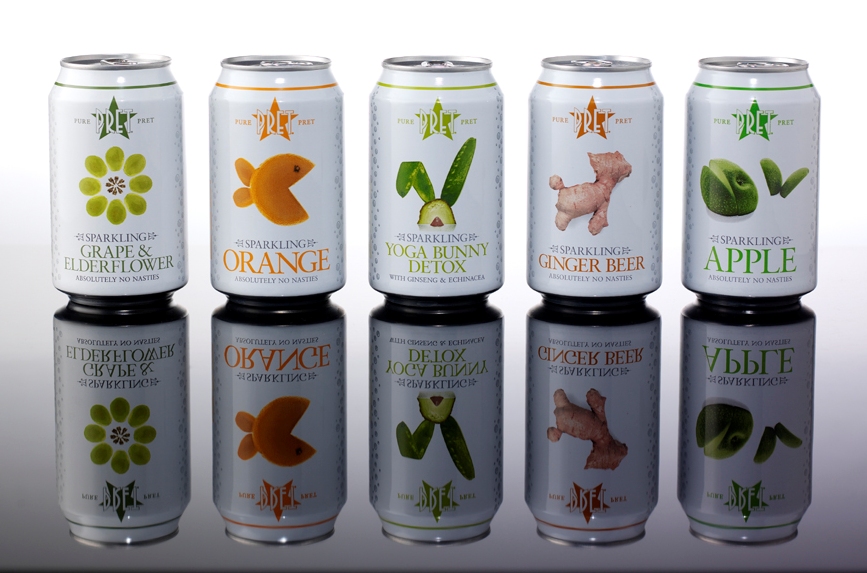
High on their heels is Pret A Manger which, like EAT, prepares its food fresh every day (each store has a kitchen), abstains from any “factory stuff” and changes its menu regularly to incorporate seasonal ingredients.  Pret started in 1986 as a London venture by college friends Julian and Sinclair; today the company has 240 stores.  They’ve  always been a socially conscious business, giving leftover food to charities, but this year Pret launched the “Really Big Christmas Dinner“, whereby they will donate 5p from every sandwich sale through Nov and Dec to hot Christmas meals for the homeless.  While I personally prefer the breakfast food at EAT, Pret has been more successful / aggressive about growing the business.  Besides offering a wider variety of products, they have grown their presence in several American cities as well as parts of Asia.
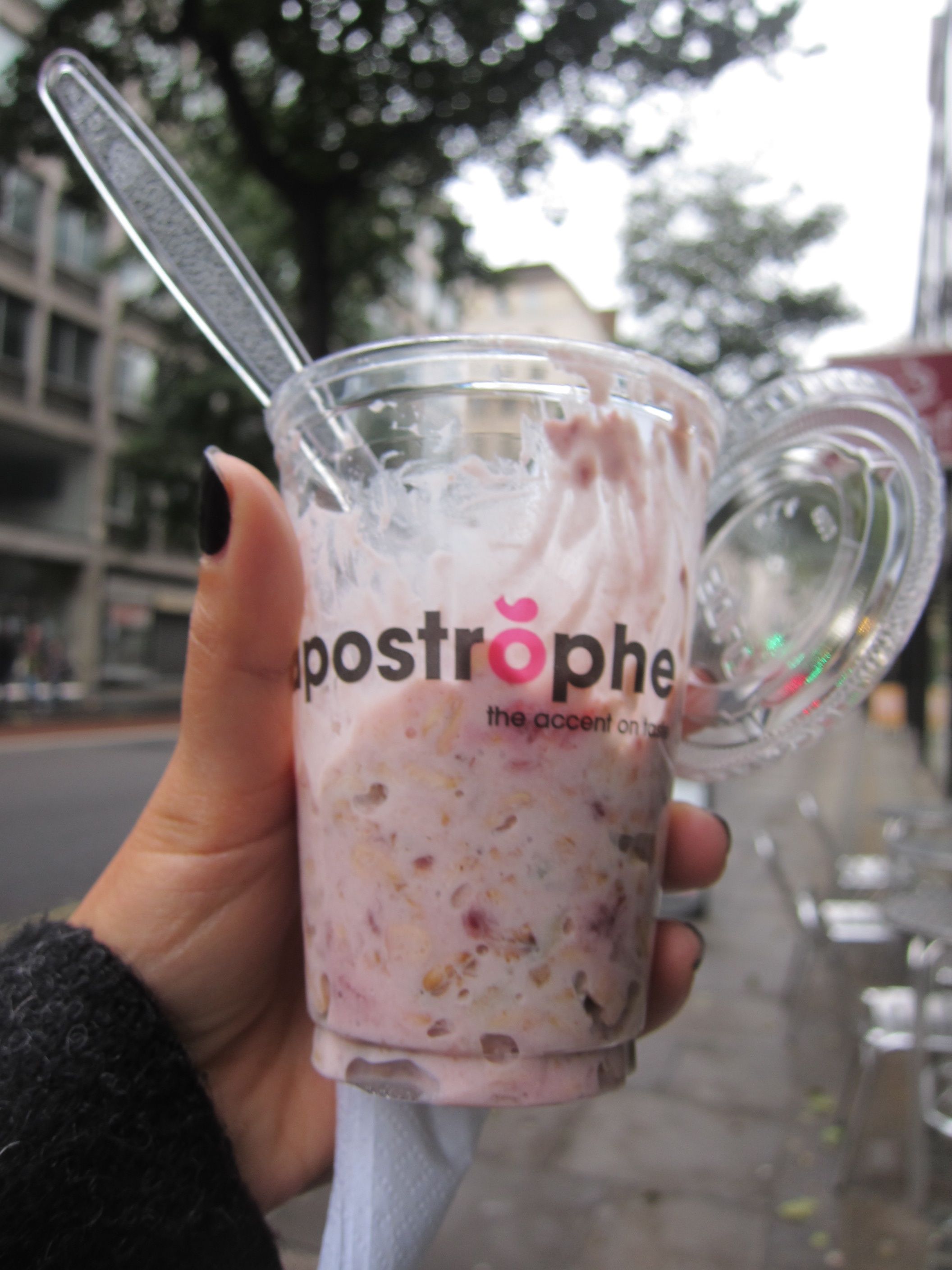
There’s also Apostrophe, a modern London take on the boulangerie-patisserie, and Innocent Drinks, a fantastic company that makes delicious smoothies and breakfast thickies with 100% pure and fresh fruit.
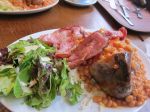
So yeah, British breakfasts are awesome and worth missing.  Bircher Muesli (Jamie Oliver recipe here), REAL bacon, sausage rolls, fresh yoghurt pots (none of that giant, mass-produced, sugary parfait stuff) and yes, a “Full English” are all hard to come by in the States.

2. Sandwiches

Sarnies, butties, baguettes, paninis…. call them what you will, they run rings around their American cousins.  And to be clear, I’m not talking about artisanal American sandwiches, prepared with whole grain mustard aioli, Vermont cheddar and what not, I’m talking about the average grab and go American sandwich, vs. the average grab and go British sandwich.

First is the issue of height.  I am well acquainted with the bigger is better way of American life, but there is really just nothing pleasant about 3″ of bland meats and salads packed inside 2″ of bland bread, held together by what looks like a toothpick.

No one can fit a real American sandwich in their mouth… and even if you somehow manage it, you’ll probably end up eating an entire piece of meat or a bland tomato slice because the fillings aren’t chopped up.  Throwing together a bunch of coarsely chopped ingredients with some mustard and ketchup does not a sandwich make.

Second, is the issue of cheese.  The average American sandwich contains American cheese, a processed cocktail of emulsifiers, preservatives and colorings engineered to melt obediently at the slightest application of heat.

Finally, there’s the issue of the bread.  I don’t know why but whether you order a sandwich at your local deli, restaurant or cafeteria or buy the bread at a supermarket, American bread just doesn’t taste as good.

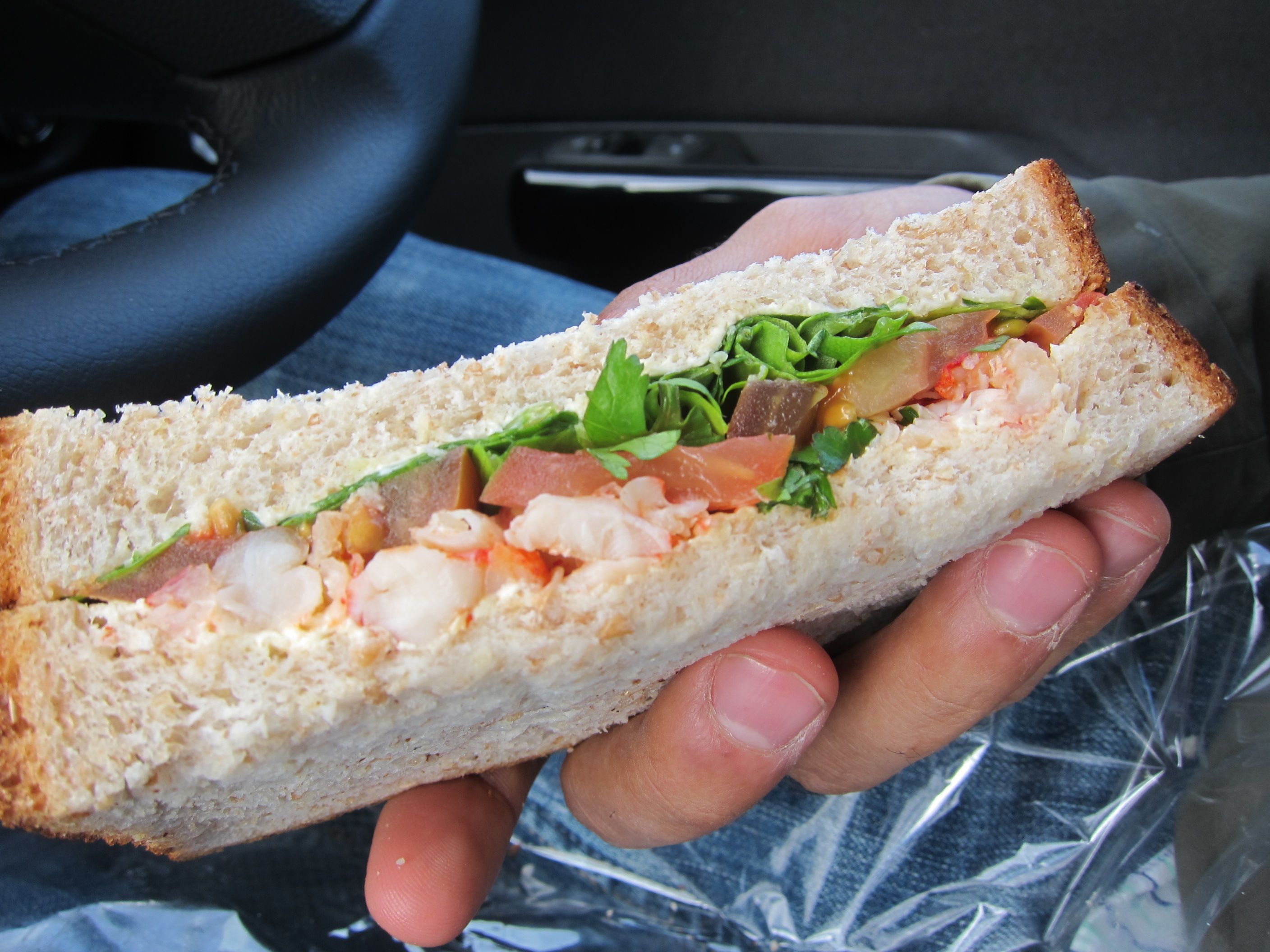
In contrast, the average Britain sandwich offers you Crayfish and Rocket (yes, instead of watery iceberg lettuce), Cheddar and Branston Pickle, Egg & Cress…multigrain, wholegrain, German rye… the options are endless.
3.  Desserts

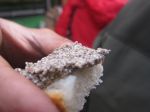
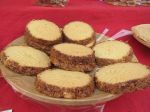
As much as I respect America’s penchant for pie-baking, England definitely wins when it comes to the sweet stuff.  Maybe it’s proximity to chocolate-loving Belgium and dessert-loving France, maybe it’s a history of cakes and trifles, no matter how you slice it, the Brits come out ahead.  England has chocolate digestive biscuits and Cadbury’s. ’nuff said.  Oreos and Hershey’s taste like cardboard in comparison.
4. Borough Market

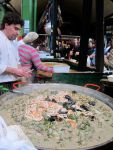
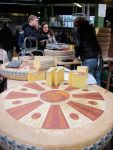
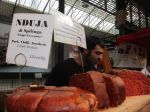
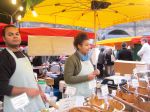
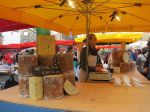
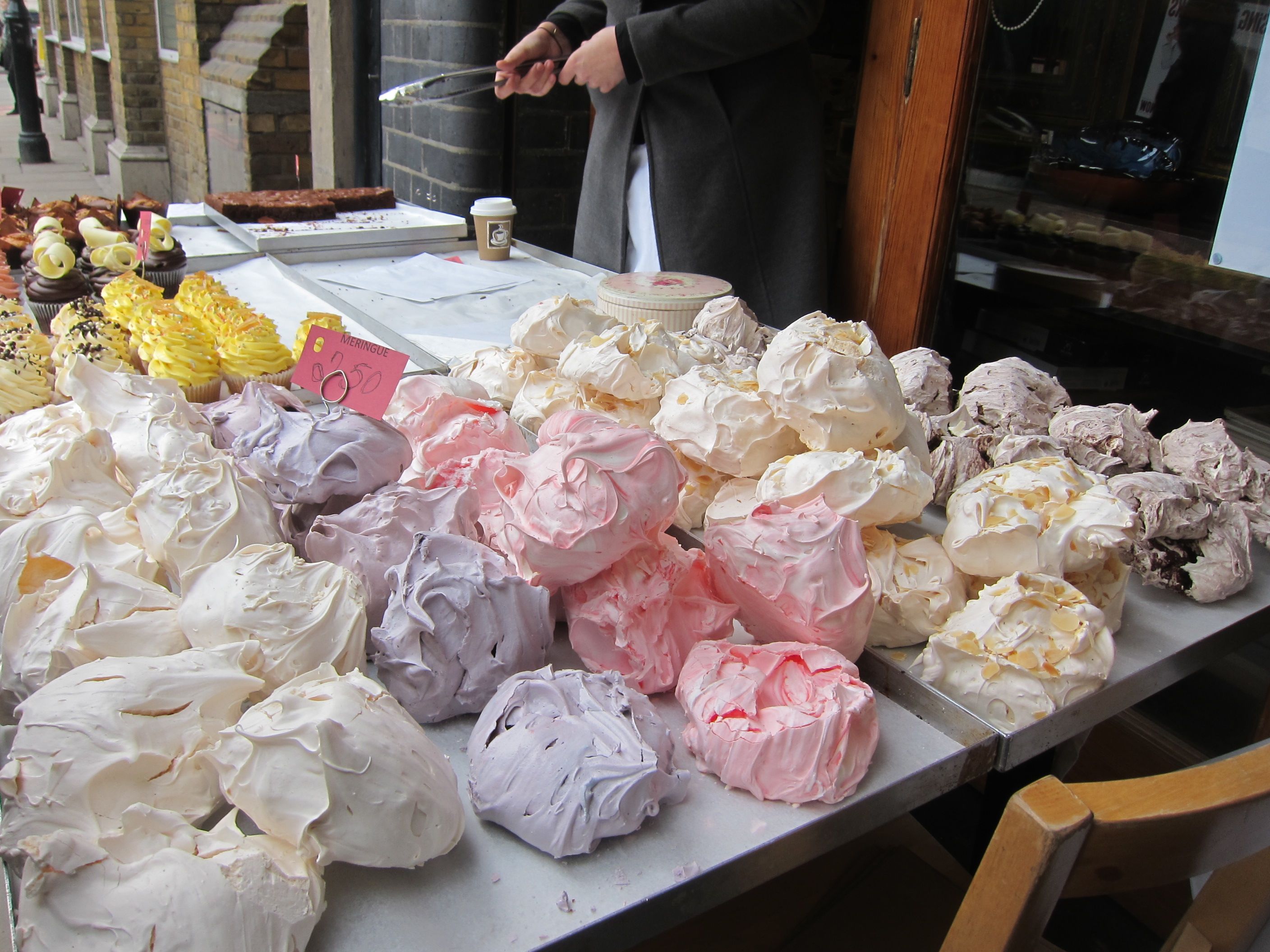
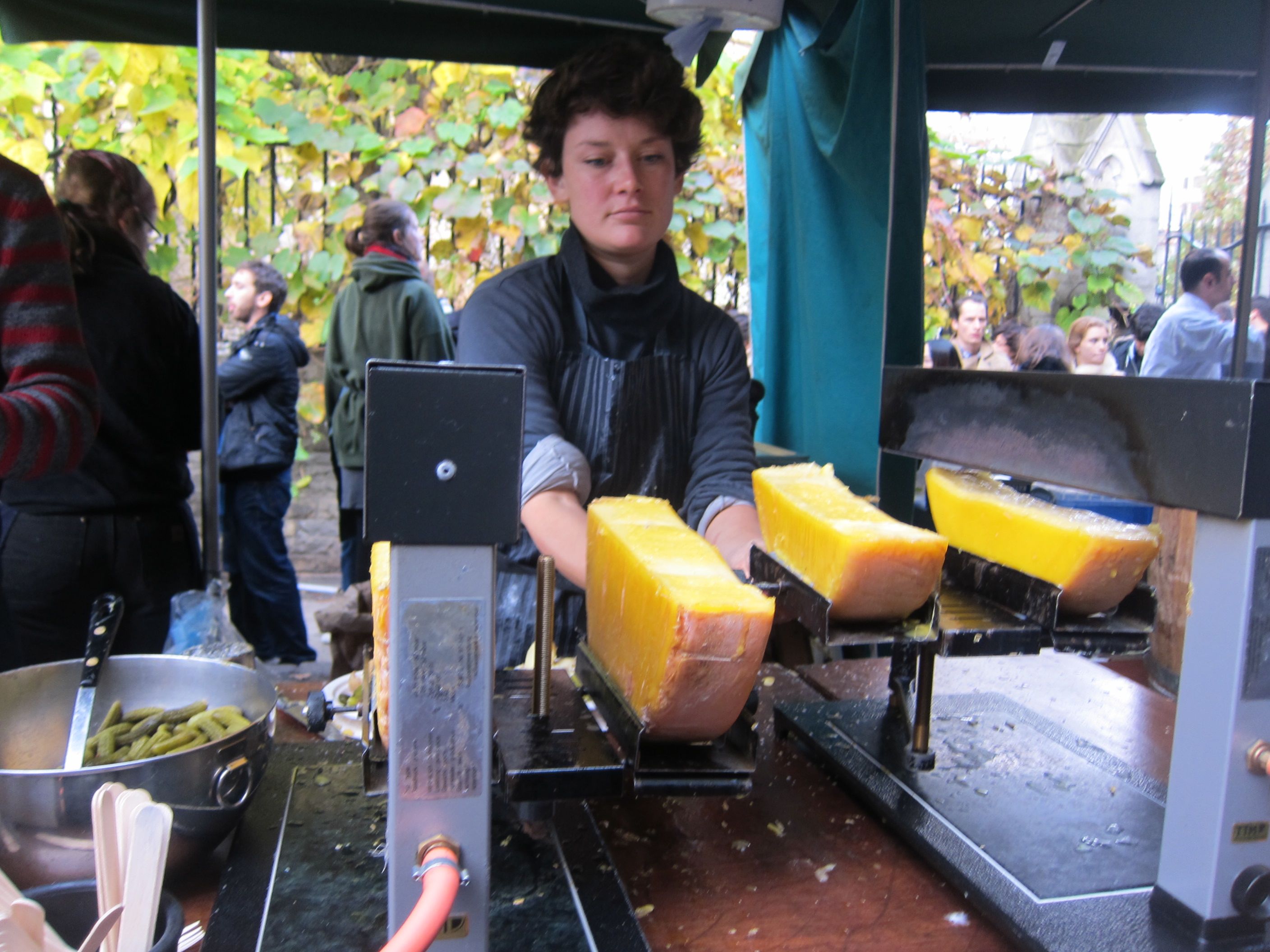
If you’ve ever visited Borough Market, you’ll know that it puts even the San Francisco Farmers’ Market to shame (which, for the record, is fantastic). Hundreds of small artisans, wholesalers, foodies and retailers flock to this bustling space each Saturday to partake in the exchange of local ‘honest’ food.  Wander past the cafes and al fresco restaurants to take in the colourful displays of fresh fruit and exotic vegetables.  Nibble on stilton and shropshire and sample the pungent patés and spicy curries.  Recharge at the fresh juice station and sip on mulled wine and hot cider at the beverage corner.  If you feel up to it, stand in line for a serving of rich, gooey raclette or for a freshly grilled burger.  Munch on your meringue, pick up some elderflower jelly and make sure you pack some Turkish delights for later.
5. Maroush, CTM and Nandos

I hate using the term ‘ethnic foods’ so I’m going to boil this down to the crux of the argument: England is really good at sussing out the “best” [insert cuisine type] dish and selling it en masse.  Rather than view this as an adulteration or departure from authenticity, I consider this a warm embrace of “foreign” culture by a hungry British public.  I love that Chicken Tikka Masala, or CTM as it is affectionately known, is India’s national dish, but only in England.  I love that people go bananas over an £9 chicken wrap at Nandos and I love that I can buy taramasalata in pretty much any grocery store.  England’s physical and psychological proximity to Continental Europe, Asia and Northen Africa uniquely positions it for access to a variety of rich culinary traditions. Joking aside, Indian food (as an example) has progressed well beyond the ubiquitous CTM and made its way into the vernacular and essence of British life.  It’s pretty easy to walk into one of Masala Zone’s many London outposts and walk out 20 minutes later with a happy tummy full of lamb roganjosh.  The same applies to the mind-blowing Lebanese food at Maroush, which you will likely encounter 11 times while walking down Edgeware Road.

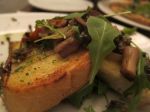
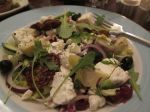
I could go on for a while in defense of what has come to represent British food, but I’ll stop here.  My point is certainly not (entirely) to rail on American food since I’m a big fan obviously, but to point out just a few of the highlights of food in England which is by no means inferior to food in America.  If you’re still hesitant to skip the pond and see for yourself, I’d encourage you to try some classic British dishes like shepherd’s pie and Welsh rarebit or indulge in some cream tea, a Sunday roast or even just some fish and chips. Until then, enjoy the pics!

Full Disclosure: I got engaged in London this past weekend and it is therefore entirely possible that I am writing this post on a (British food?) high 🙂


Van Leeuwen’s Artisan Ice Cream


I’ve never been a huge ice cream fan. Unlike my childhood friends, I rarely chased after the ice cream truck and unlike my college friends, I bailed on day 3 of our Roman gelato expedition (sorry!). Ice cream was nothing more than a molten chocolate cake compliment as far as I was concerned and didn’t hold a candle to Tiramisu.

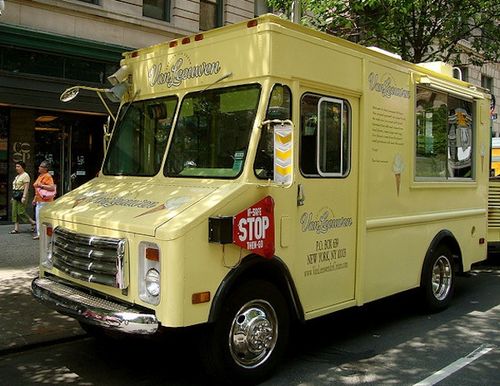
If your feelings toward icecream sound similar to the above, Van Leeuwen just might change your mind. Launched in 2008 by New York entrepreneur and ice cream connoisseur Benjamin Van Leeuwen, these sunny lemon trucks deliver artisan ice cream to the masses. Van Leeuwen’s ice cream is made from organic, locally sourced ingredients including fresh cream, fresh milk, sugar and egg yolks. The manufacturing process abstains from preservatives and thickeners like condensed milk and corn syrup, emphasizing tradition rather than efficiency.


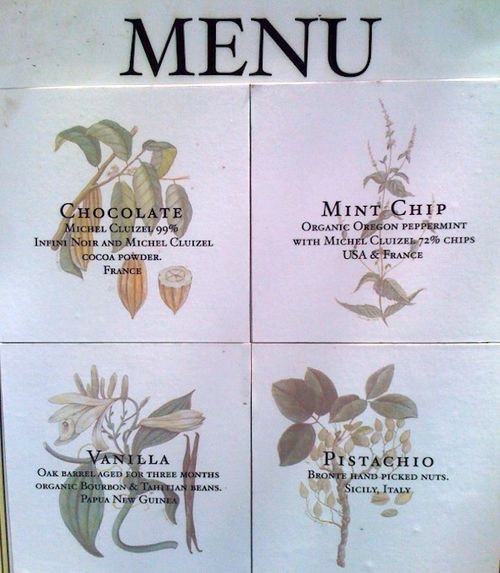
Another differentiating aspect of Van Leeuwen is its menu. Exceedingly simple, the 12 flavor offering represents seasonal ingredients and is neatly presented through hand painted herbs and spices. We chose a scoop each of Earl Grey Tea and Ginger – yum! The Earl Grey was delicate but complex and left a fantastic aftertaste of bergamot. The Ginger, in contrast, was unmistakably bold and masterfully combined the sharp tanginess of ginger tea with the sweetness of crystallized ginger.

I rarely get to the bottom of these giant ice cream cups, but the lightness and flavor of Van Leeuwen’s is hard to resist.  If you haven’t already, go check it out.  The trucks are usually parked in central NoHo, SoHo and the West Village and there’s usually one uptown near 60th and Madison; follow @VLAIC on Twitter for location updates. At $5.75 for a medium-sized biodegradable cup, Van Leeuwen’s doesn’t come cheap, but it is soo worth it 🙂

Summer Salads: Salmon Niçoise


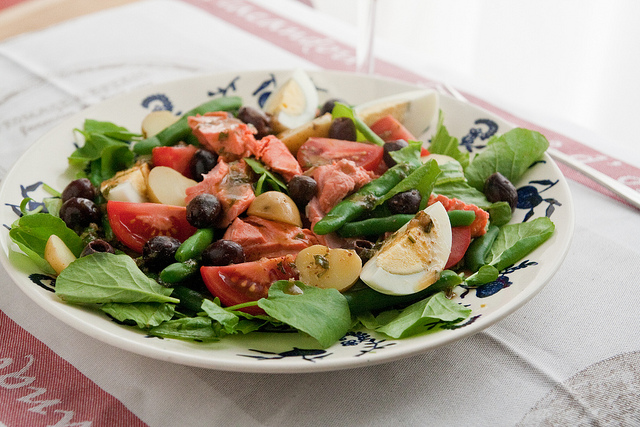
After watching Julia Roberts indulge her appetite for spaghetti bolognese, pizza napoletana and fluffy Italian desserts in Eat Pray Love, I decided to go back to Italy do some cooking of my own. I’ve had the good fortune to eat at some mind-blowing restaurants this summer, but I’m excited to try out some new recipes and tinker with some old favorites. So, to ease into it, here’s my simple spin on a hearty, healthy Salade Niçoise:

Salad Ingredients:
One cup salad leaves (mesclun mix works great here, but you can substitute with whatever you like / have on hand)
2 eggs, boiled and cut into wedges
A handful (100gms) of green beans
A few artichoke hearts in brine, drained
2 plum tomatoes (or other tomatoes, in season) cut into wedges
10 black olives (no big deal if you use green)
200gm canned cannellini beans, drained and rinsed (you can also use butter beans aka lima beans)
200gm canned salmon in brine or spring water, drained and separated into chunks (you can also use the more traditional tuna)
1 tbs capers
1 tbs chopped tarragon

Dressing:
1 garlic clove, crushed
2 tsp Dijon mustard
1/4 cup olive oil and balsamic vinegar (traditional recipe calls for French Dressing)

Prep time: 15 minutes
Cooking time: 10 minutes
Serves: 2

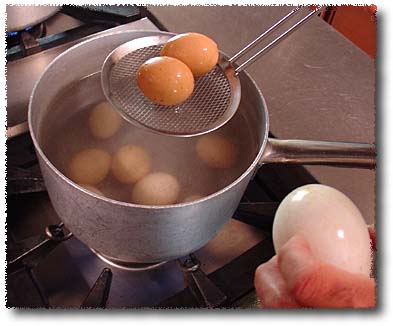
For perfectly boiled eggs, place them in a saucepan and cover them with cold water. There should be enough water to cover an inch above the eggs. Cook over medium heat until the water comes to a boil and then simmer for 3-4 minutes. Drain and plunge the eggs into cold water to stop the cooking process (you don’t want the whites to taste rubbery or the yolks to turn grey). Peel and cut into wedges.

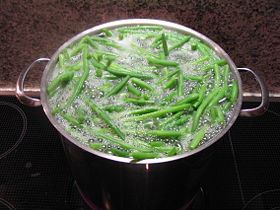
Next, you need to blanch the green beans. Prepare them by washing thoroughly and then snipping the tip off with a paring knife (the stem end tends to be very tough). Fill a saucepan with water and bring to a boil. Do not add salt as this will draw water out of the beans. At the same time, ready an ice bath with ice cubes and cold water. Drop the beans into the boiling water and let them cook for 2 minutes. Then drain with a slotting spoon and let them chill in the ice bowl for about 5 minutes. This will halt the cooking process and prevent them from turning soggy.

Arrange the salad leaves on two plates and add the tomato, artichoke, salmon, egg, green bean and cannellini beans. Top with the capers and olives.

To make the dressing, put the ingredients together in a bowl or cup and whisk until blended. Season with salt and freshly ground black pepper. Drizzle over the salad and sprinkle with tarragon. Done!

Rachel Ray's salmon niçoise
Rachel Ray’s salmon niçoise

*Note: you can also add back in the sardines as well as red potatoes. I deliberately excluded them from this recipe because sardines are the one thing I absolutely refuse to eat and because cooking potatoes will add 15 minutes to this recipe 😉

Zenkichi, Brooklyn, NY

Urban jungle getting you down?  Elbows sore from fighting through the Manhattan sea of humanity?  Just wanna see some trees?  Fear not, for Brooklyn is but a hop, skip and an L train ride away.

Last Friday, with friends visiting from London and Philly, we headed over to Williamsburg for a propuh night out.  First stop: the Gutter.  If you’re tired of paying an arm and a leg to listen to cheesy house music and eat artery clogging pizza at Chelsea Piers, the Gutter is a refreshing change of pace.  Eight lanes, $3 shoes and just $45 to rent a lane for a an entire hour on weekends.  We snacked on disco fries (yum) and drank beer while indulging our my poor bowling skills. A few pitchers later, we began walking over to Zenkichi.

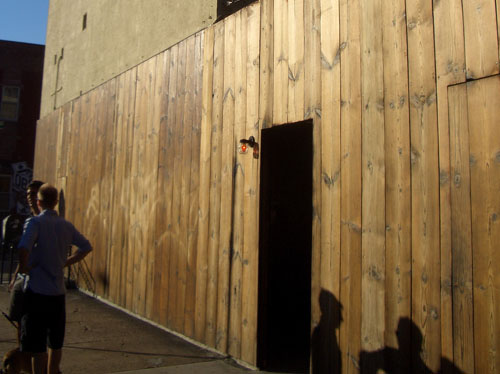
The quiet, tree-lined streets we’d crossed earlier were now swaying to the rhythm of canvas-toting, sandal-wearing Brooklyn hipsters.  We passed bars, clubs and even the occasional all-night bookstore (what?) before arriving at our destination – a giant warehouse, boarded up with what looked like planks of wood.  Welcome to Zenkichi.

Opened in 2006 by a homesick Tokyo native, Zenkichi describes itself as “a modern Japanese brasserie providing an authentic dining experience of popular Tokyo establishments”.  I’ve never been to Tokyo, so I’m not the best person to opine on its authenticity, but if the ambience is anything to go by, you’ll feel as far away from the urban jungle as possible with a 20 minute train ride.

Ambience:
The entryway is dark and cave-like, the hostess is Japanese.  She politely enquires if any one in our 10 person party is pregnant or under 14 (children are not welcome) and then introduces us to our waitress, who smiles and begins guiding us carefully up a lantern-lit staircase.  The walkways are strewn with pebbles, sectioned off by mirrors and punctuated, of course, by bamboo stalks.  The dim lighting, abundant foliage and babbling of moving water will lull you into a dream-like state, making you think, for an instant that you’re in some sort of secret lair – a maze leading to a Bond movie rendezvous.  Our table, like everyone else’s was cloaked in bamboo curtains, secluded but by no means isolated.  A tiny button at the end of the table could summon our waitress should we need her. Exciting, if you’re into that sort of thing.

If you google “Zenkichi” you will find that a lot of foodbloggers, magazines and food critics have written about the place.  It’s a favorite amongst Japanese food purists and amateurs alike.  I will not, for that reason, spend a lot of words on the food, but I will strongly recommend getting the omakase, the chef’s tasting menu. Thrust upon us for being such a large group, the omakase costs $55 and comprises eight unique courses – absolutely fantastic value.

Food:
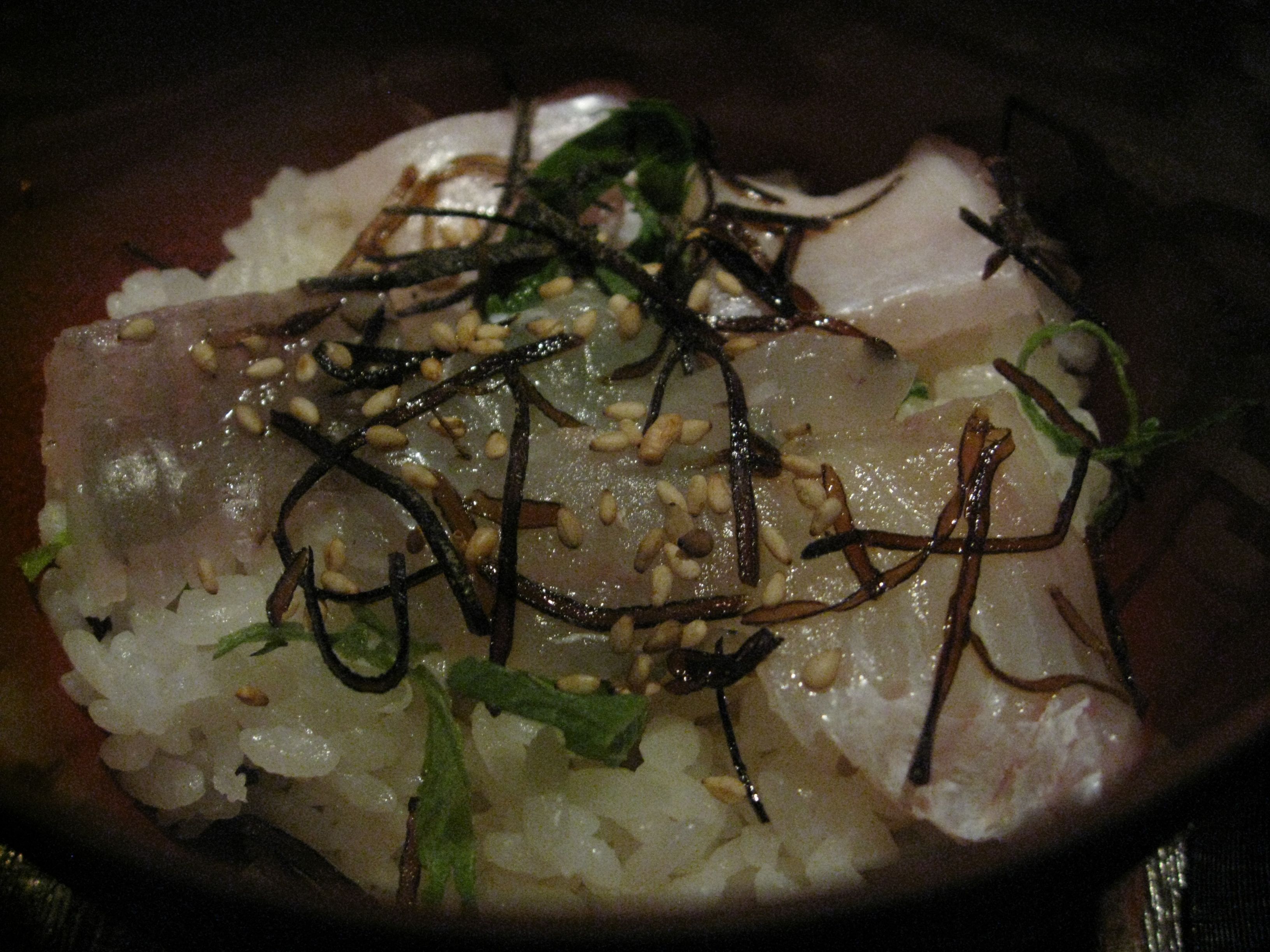
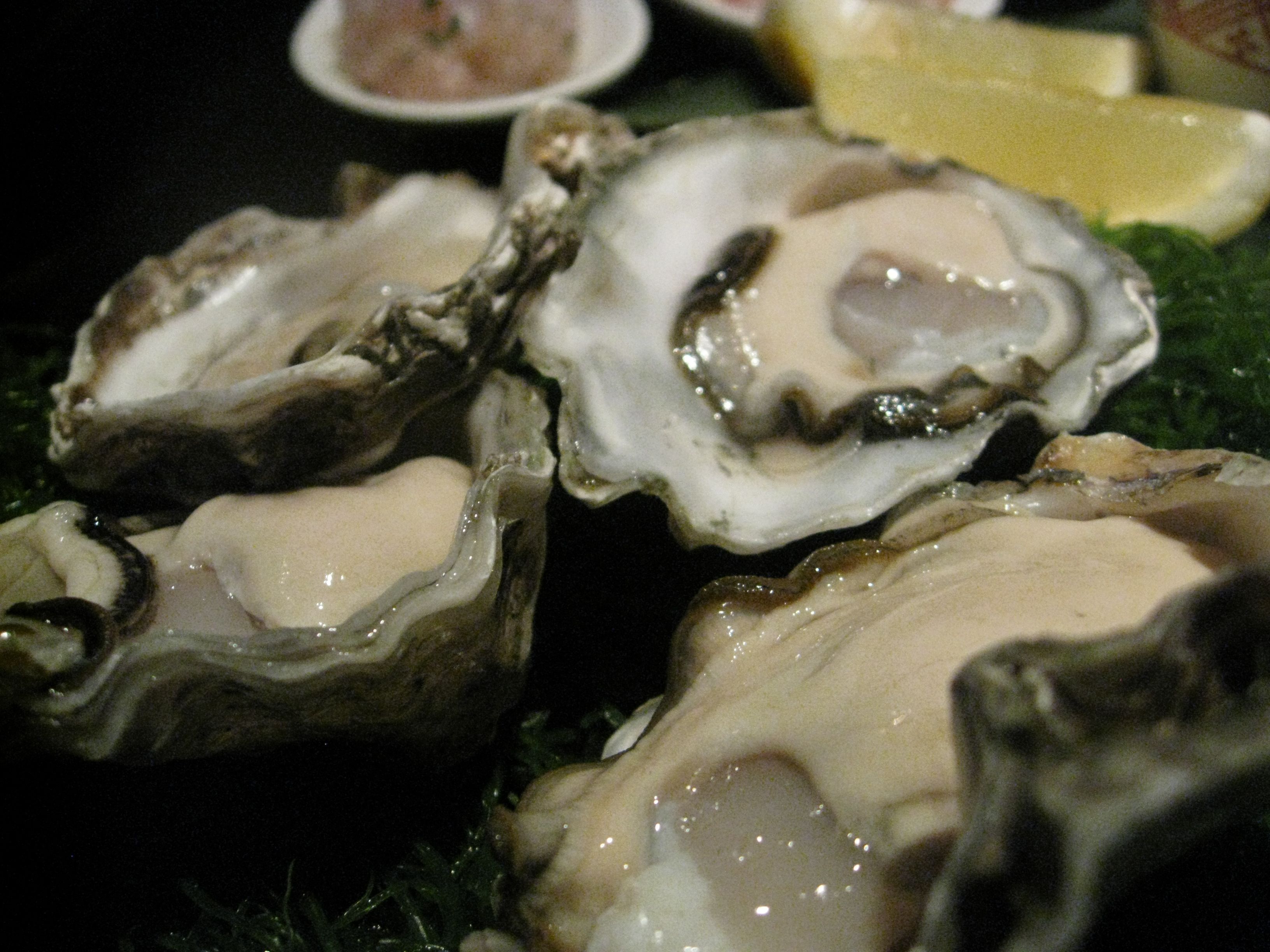
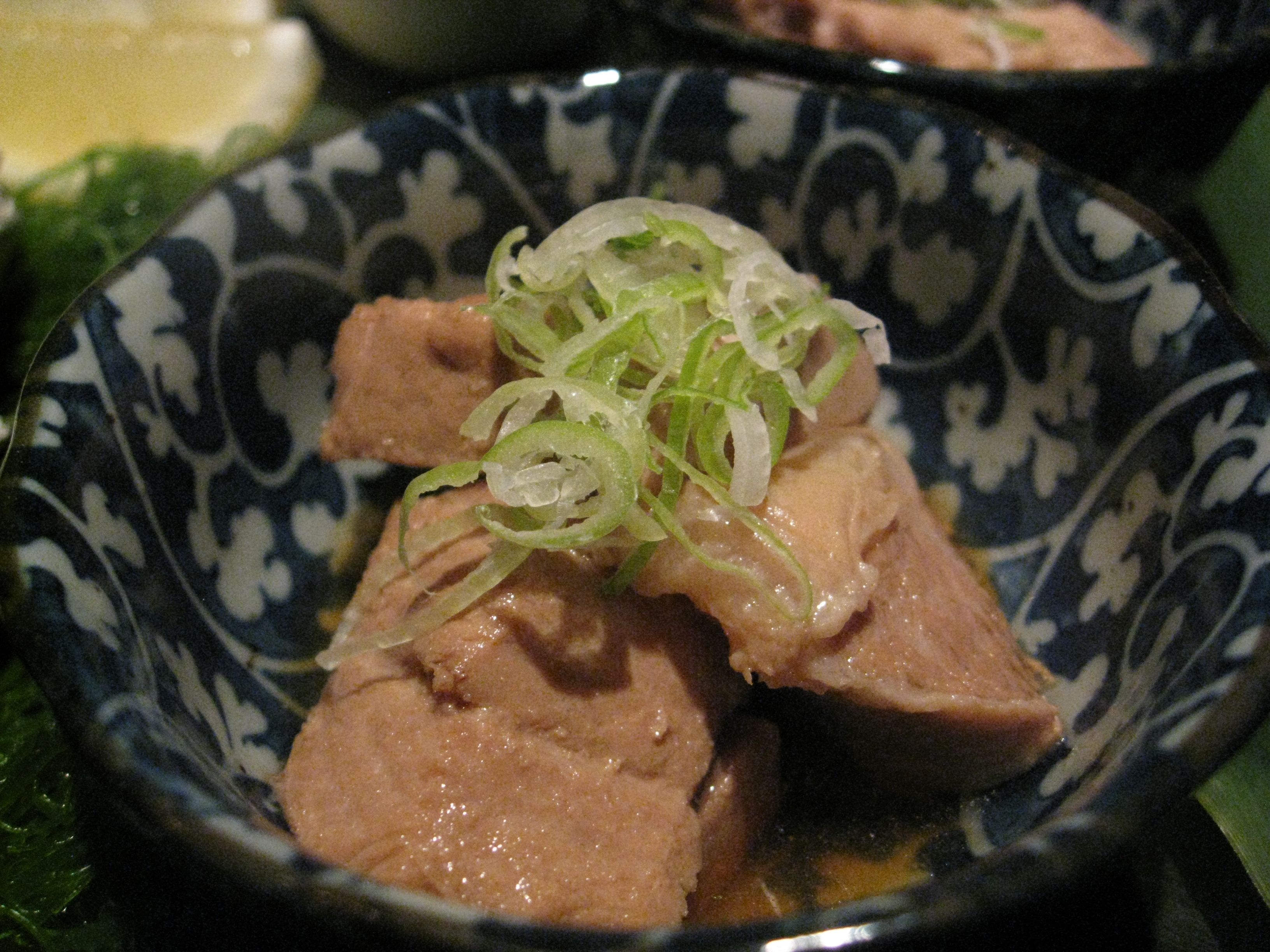
Over the course of 2 hours, we slurped oysters (fresh and delicious), munched on vegetable tempura, sampled the signature Zenkichi salad and tucked into the silky richness of the famous miso-glazed cod.  Being a traditional Japanese brasserie, Zenkichi does not serve any sushi which can be a tad disappointing if you’re looking for your Saturday night sushi fix. That said, the variety of dishes was impressive and while portions were small, the meal overall was very filling.  Some dishes, such as the duck (too tough) and the yellowtail sashimi on rice (I needs more vinegar!) were mediocre but, overall, the food was very good.

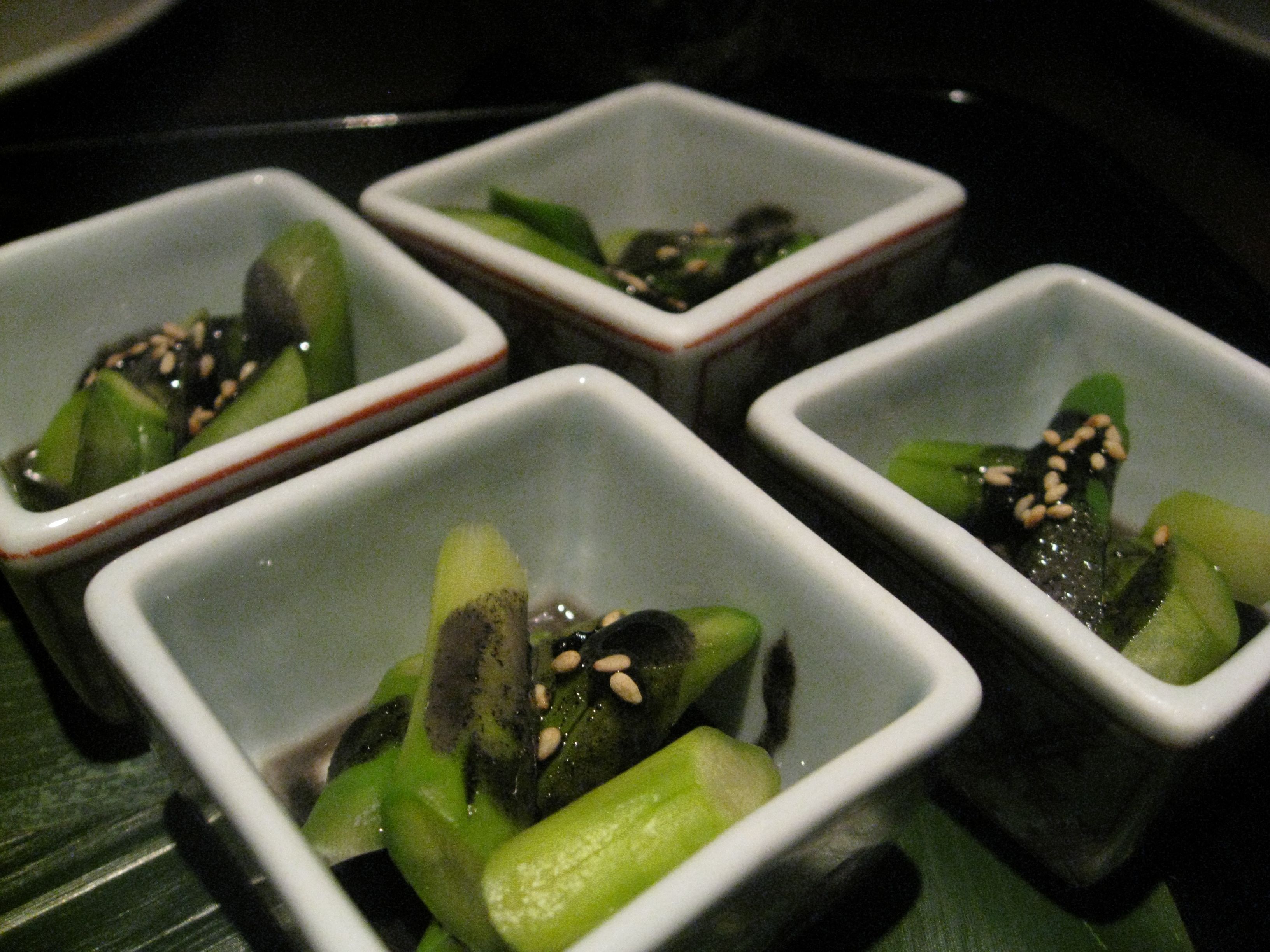
Course II (a): Asparagus Appetizers
Course II (b) Kumamoto Oysters
Course II (c): Maguro Tuna
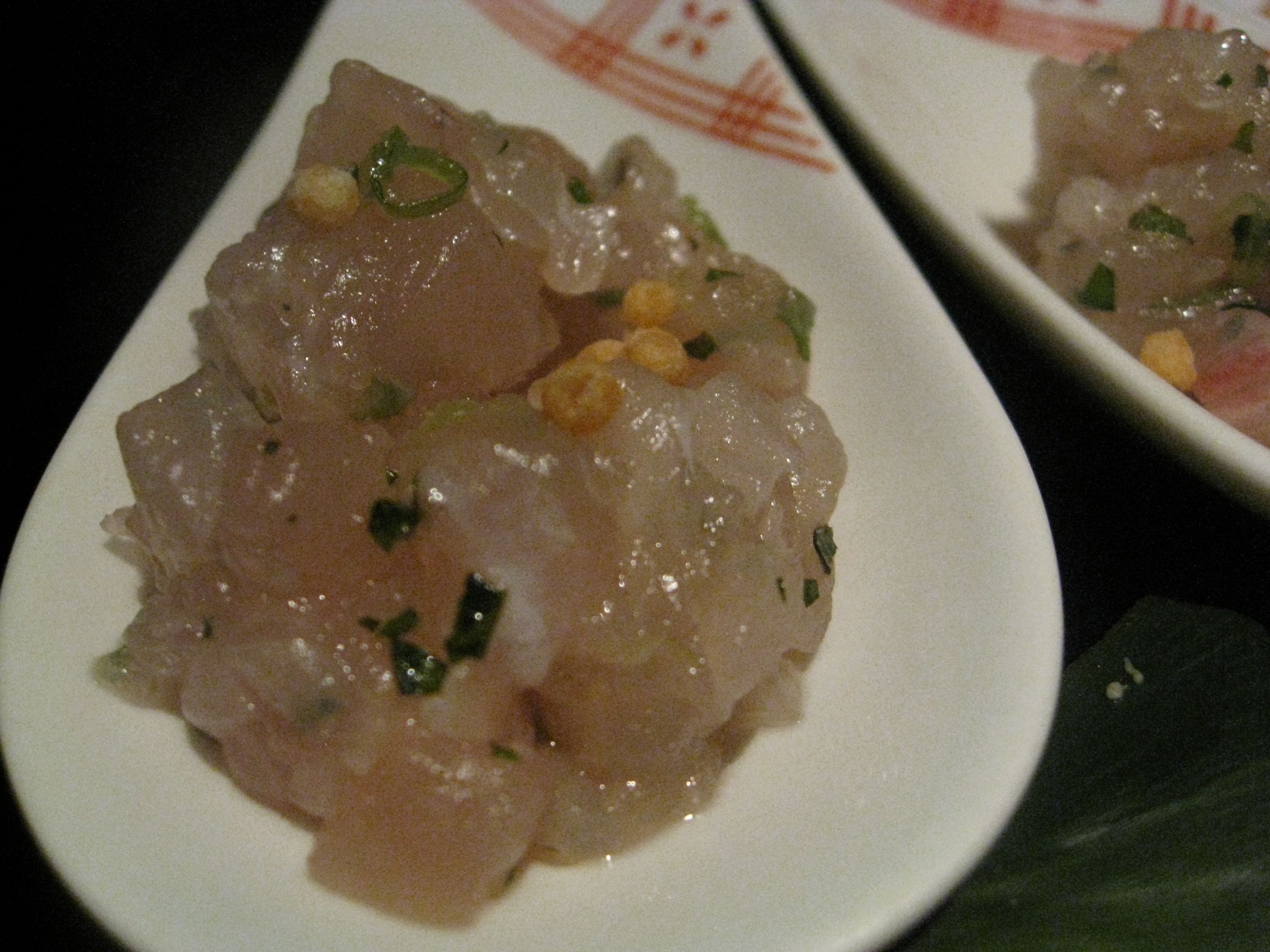
Course II (d): Hiramasa Tartare

The slew of sakes, variously described as “earthy”, “rich” and “fruity”, perfectly complemented the dishes and the  desserts (try the black sesame mousse) were interesting enough for us to sample despite being stuffed.   We also received a tray of complementary truffles as a “second dessert” which we were all too full to partake in.

Black sesame mousse – a little too frozen to really be a \”mousse\”

Summary & Verdict:
Zenkichi was really interesting and different and cool.  It’s a great place to take your out-of-town friends because it has that “wow” factor people come to New York for, as well as the authenticity that every foodie likes to brag about.  The stellar ambience however, perhaps unfairly, generates sky high expectations for the food.  While nothing is terrible, some of Zenkichi’s dishes are mediocre and the Omakase, I thought, could be more creative.  Maybe I need to develop my Japanese purist palate since a lot of foodbloggers absolutely gush over this place but, for now, I’m reluctant to give it the same sort of rock solid recommendation as some of the ol’ favorites.

Details: http://www.yelp.com/biz/zenkichi-brooklyn

Damage: $98 including tax and tip, for the Omakase ($55) and a lot of sake.

Zenkichi on Urbanspoon

A Peasant in Nolita, NYC

Earlier this week, the bf and I met up with his friends for our monthly dinner.  As is typical of these reunions, there was a long list of requirements on the restaurant choice, not least of which involved the food.  Despite my usual reluctance to use Open Table, I briefly resorted to it, before finding a 9pm table at Peasant.

Ambience:
Having walked by it several times, I knew that Peasant was set in a beautiful space.  The entryway is small and the restaurant itself slightly recessed.  The floor to ceiling windows offer a great view onto a cute, neighbourhoody street while the red brick walls, stone floors and dim lighting create a warm aura of rustic Italian charm.  Peasant is much bigger than it looks from the outside and if you walk past the well-stocked bar, it opens up into a cavernous space with an open fire kitchen and many tables. The clinking of wine glasses and the euphony of happy dinner chatter help create a lively ambience without being too loud.  Perfect.

Service:
Unfortunately, Peasant’s early wins were somewhat undermined by a long wait for our table.  I hate it when New York restaurants book tables too close together or when (worse) they deliberately dilly dally so that you’ll buy drinks at the bar. We did happily buy drinks at the bar though and they turned out to be pretty delicious. (Try the La Contessa.)

Food:
Service continued to be slightly slow but we enjoyed our appetizers of razor clams, spring vegetables and a bocconcini salad.  The entrees were a little more mixed. The gnocchi was good but a bit one dimensional and slightly doughy whereas the lamb con polenta was a disappointment. The lasagne con capretto was absolutely delicious and easily the best dish of the night but, when your best entree is the lasagne, something isn’t right.

The portions are large, but we’d saved some room for dessert and ordered the hazelnut gelato and a cheesecake.  The gelato was good but the cheesecake not really edible.  Hmmm.

Summary:
Not really sure what to recommend here. This is another place I really wanted to like but the food was a little underwhelming (especially given the expectations generated by the outstanding ambience and “open fire” cooking) and the service was iffy.   I would go back and maybe try some different dishes, drink some wine and sit near the window. But if you’re looking for a guaranteed fantastic meal, this is not your place.

Damage: $270 for four with drinks.

Other: Interestingly, Peasant has been around for nearly 10 years.  That’s like a lifetime in New York restaurant time!  A lot of the rave reviews it’s received pertain to another era so maybe it’s moved south over time.

Peasant on Urbanspoon