Cant Stop Eating Chocolate Digestive Biscuits

It’s been a while, I know.  But I promise I’ve been really really busy.  For example, two weeks ago I was in England, hopping between London, Cambridge and Leeds as I re-connected with some of my all-time favorite foods.  After 30 painful months of separation, I am in love, all over again, with British food.

Now, I know what you’re going to say and I’ve heard it all before: British food is terrible, bland, over-cooked, stodgy stuff that no one should have to eat.  But you’re wrong and here’s why:

1. British breakfasts are awesome.

Yes, fry-ups are bad for you, but that’s not what I’m talking about.  I’m talking about variety.  As much as I love bagels, cream cheese, capers and lox and even though I’ll admit to sneaking eggs on a roll with Tabasco from my local street cart every so often, New York’s breakfast options are surprisingly limited beyond that.  And no, I don’t really consider Dunkin Donuts or Krispy Kreme to be purveyors of real breakfast food.

For starters, there’s EAT.  Yes, they’re a chain but they’re also dedicated to fresh, quality food.  EAT serves a delicious selection of toasted breakfast sandwiches, muesli, granola, yoghurts and fruit salads.  EAT doesn’t buy a single mass-produced sandwich, soup or salad – they make everything fresh in their own kitchen with a one day shelf life.

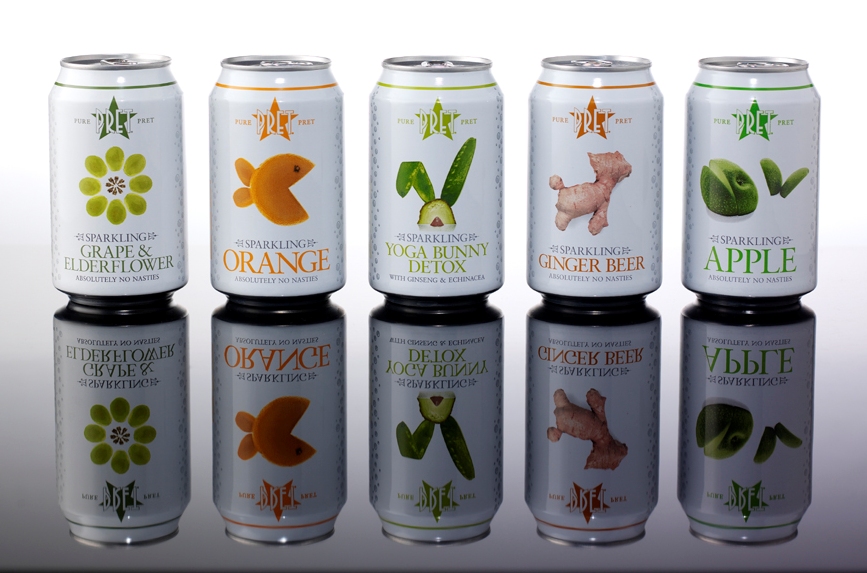
High on their heels is Pret A Manger which, like EAT, prepares its food fresh every day (each store has a kitchen), abstains from any “factory stuff” and changes its menu regularly to incorporate seasonal ingredients.  Pret started in 1986 as a London venture by college friends Julian and Sinclair; today the company has 240 stores.  They’ve  always been a socially conscious business, giving leftover food to charities, but this year Pret launched the “Really Big Christmas Dinner“, whereby they will donate 5p from every sandwich sale through Nov and Dec to hot Christmas meals for the homeless.  While I personally prefer the breakfast food at EAT, Pret has been more successful / aggressive about growing the business.  Besides offering a wider variety of products, they have grown their presence in several American cities as well as parts of Asia.
There’s also Apostrophe, a modern London take on the boulangerie-patisserie, and Innocent Drinks, a fantastic company that makes delicious smoothies and breakfast thickies with 100% pure and fresh fruit.
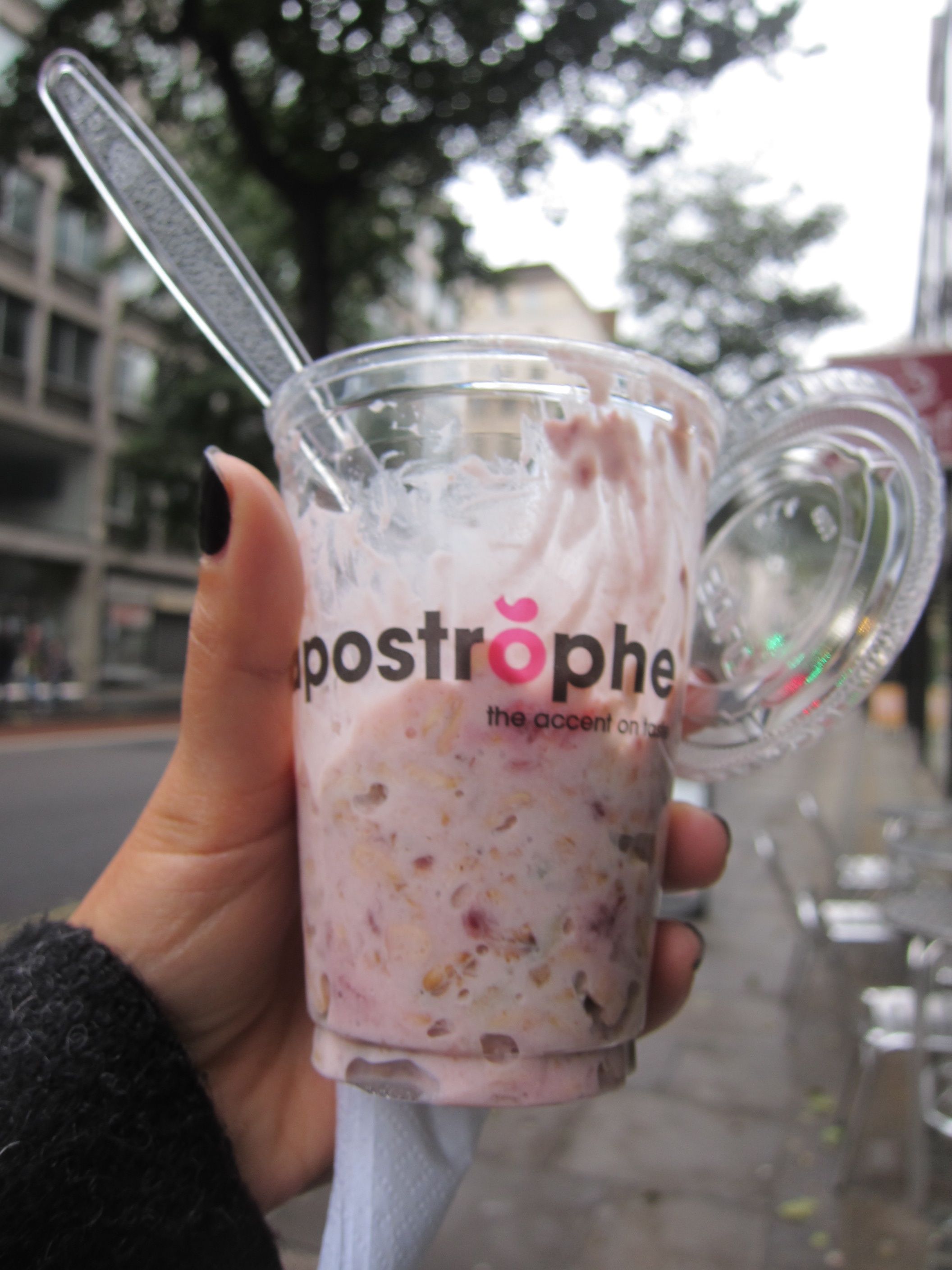
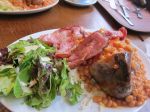
So yeah, British breakfasts are awesome and worth missing.  Bircher Muesli (Jamie Oliver recipe here), REAL bacon, sausage rolls, fresh yoghurt pots (none of that giant, mass-produced, sugary parfait stuff) and yes, a “Full English” are all hard to come by in the States.

2. Sandwiches

Sarnies, butties, baguettes, paninis…. call them what you will, they run rings around their American cousins.  And to be clear, I’m not talking about artisanal American sandwiches, prepared with whole grain mustard aioli, Vermont cheddar and what not, I’m talking about the average grab and go American sandwich, vs. the average grab and go British sandwich.

First is the issue of height.  I am well acquainted with the bigger is better way of American life, but there is really just nothing pleasant about 3″ of bland meats and salads packed inside 2″ of bland bread, held together by what looks like a toothpick.

No one can fit a real American sandwich in their mouth… and even if you somehow manage it, you’ll probably end up eating an entire piece of meat or a bland tomato slice because the fillings aren’t chopped up.  Throwing together a bunch of coarsely chopped ingredients with some mustard and ketchup does not a sandwich make.

Second, is the issue of cheese.  The average American sandwich contains American cheese, a processed cocktail of emulsifiers, preservatives and colorings engineered to melt obediently at the slightest application of heat.

Finally, there’s the issue of the bread.  I don’t know why but whether you order a sandwich at your local deli, restaurant or cafeteria or buy the bread at a supermarket, American bread just doesn’t taste as good.

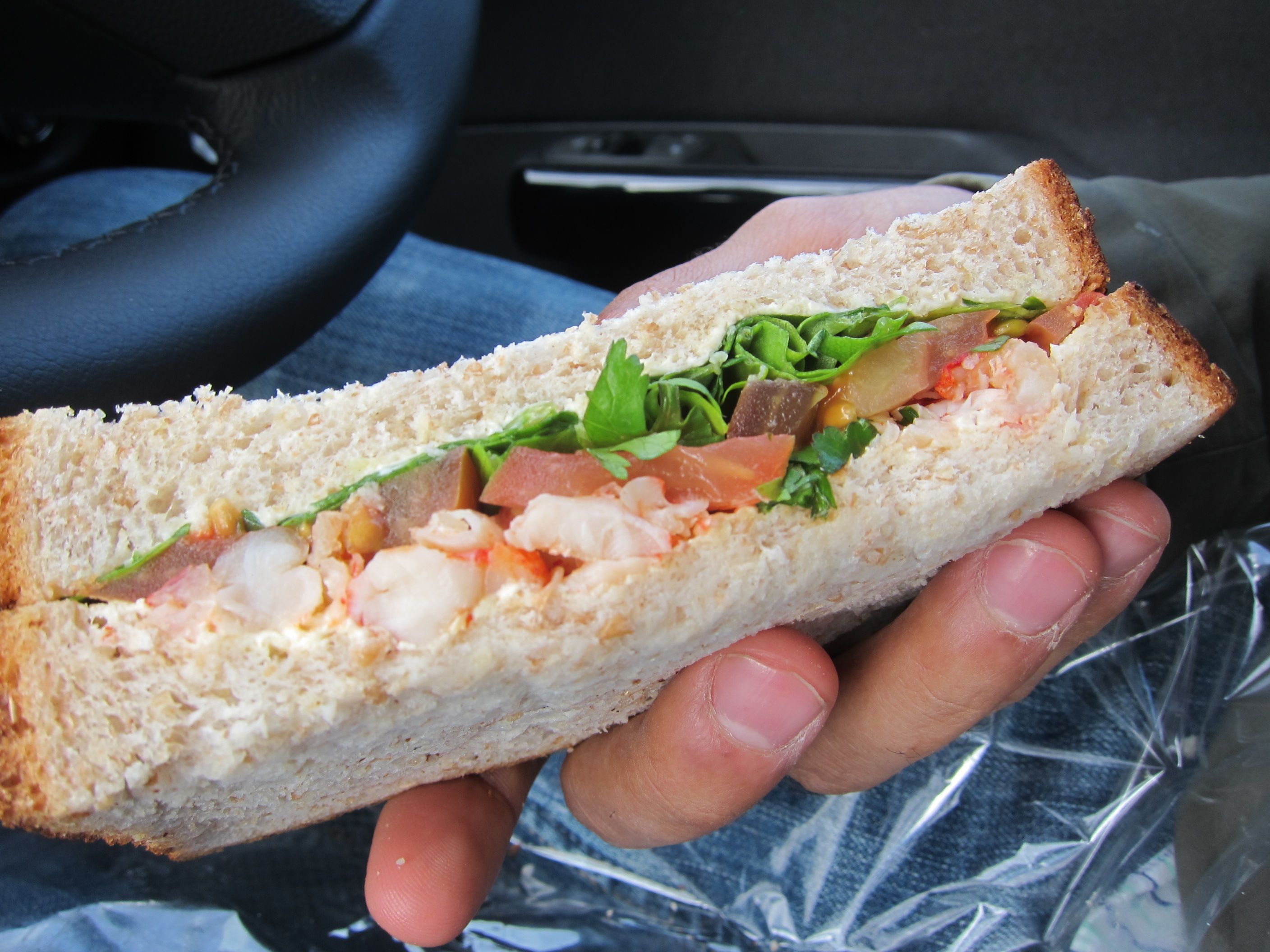
In contrast, the average Britain sandwich offers you Crayfish and Rocket (yes, instead of watery iceberg lettuce), Cheddar and Branston Pickle, Egg & Cress…multigrain, wholegrain, German rye… the options are endless.
3.  Desserts

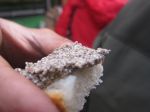
As much as I respect America’s penchant for pie-baking, England definitely wins when it comes to the sweet stuff.  Maybe it’s proximity to chocolate-loving Belgium and dessert-loving France, maybe it’s a history of cakes and trifles, no matter how you slice it, the Brits come out ahead.  England has chocolate digestive biscuits and Cadbury’s. ’nuff said.  Oreos and Hershey’s taste like cardboard in comparison.
4. Borough Market

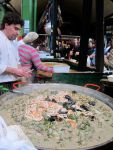
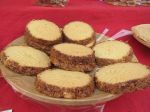
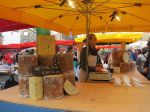
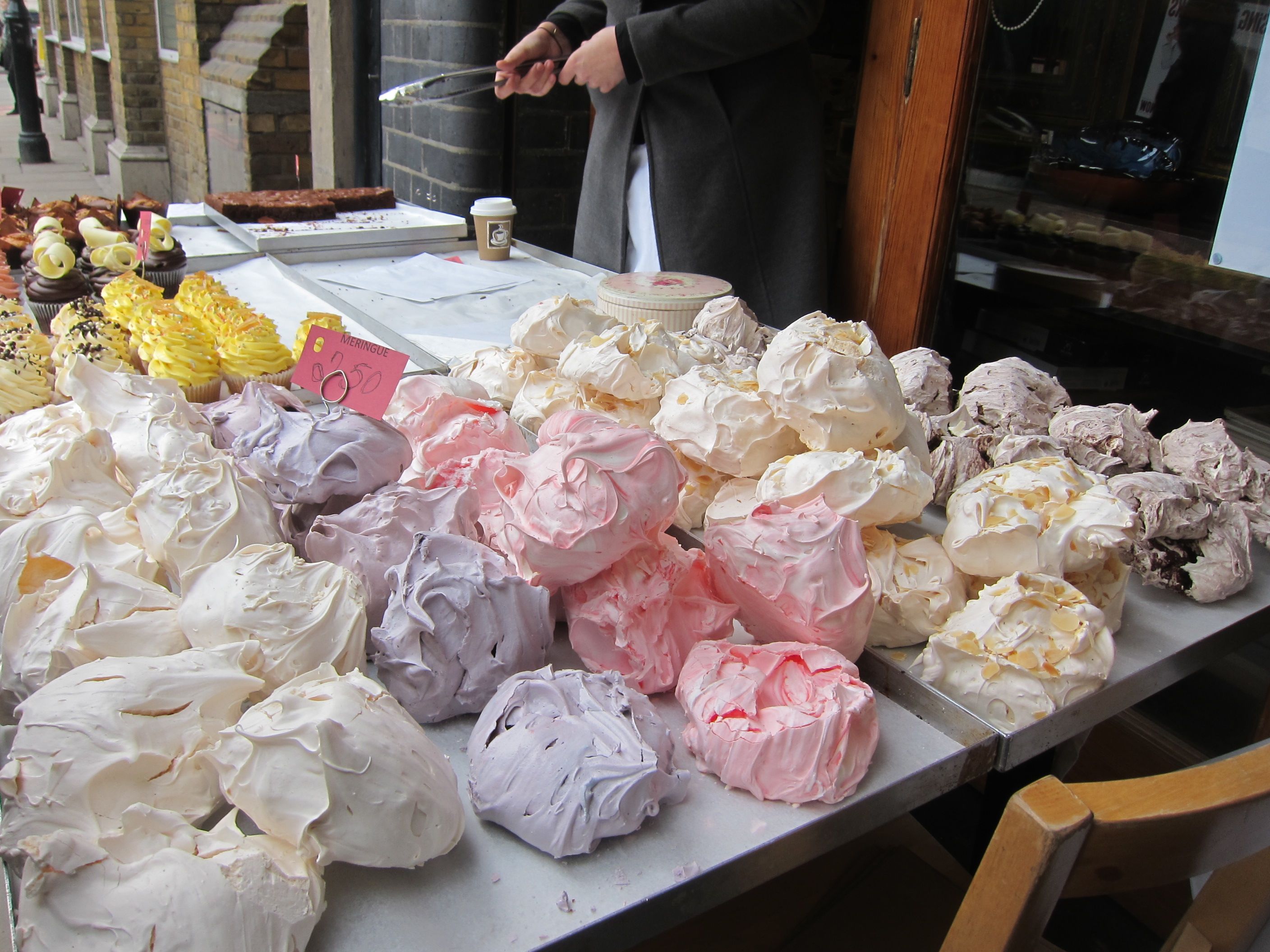
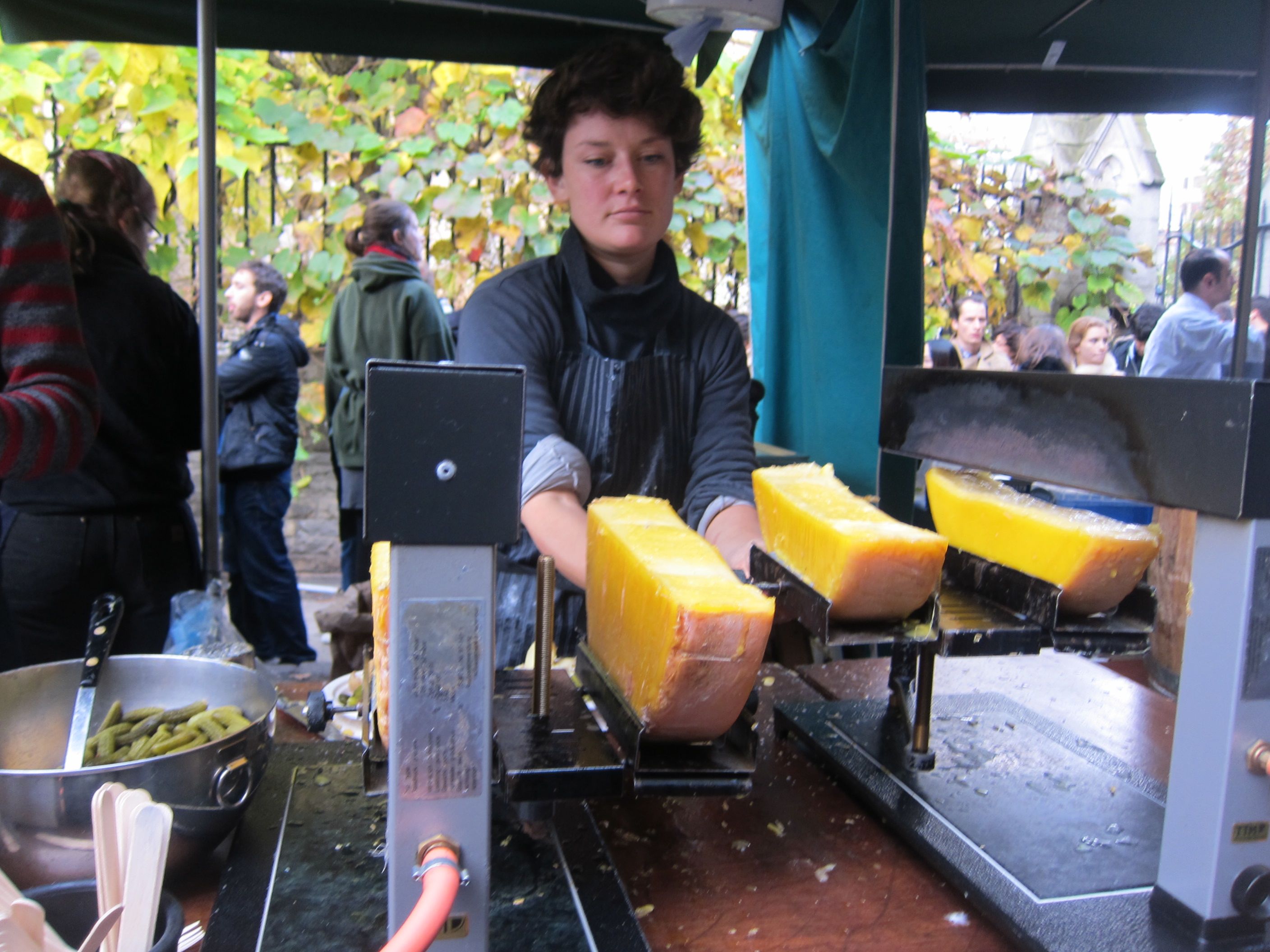
If you’ve ever visited Borough Market, you’ll know that it puts even the San Francisco Farmers’ Market to shame (which, for the record, is fantastic). Hundreds of small artisans, wholesalers, foodies and retailers flock to this bustling space each Saturday to partake in the exchange of local ‘honest’ food.  Wander past the cafes and al fresco restaurants to take in the colourful displays of fresh fruit and exotic vegetables.  Nibble on stilton and shropshire and sample the pungent patés and spicy curries.  Recharge at the fresh juice station and sip on mulled wine and hot cider at the beverage corner.  If you feel up to it, stand in line for a serving of rich, gooey raclette or for a freshly grilled burger.  Munch on your meringue, pick up some elderflower jelly and make sure you pack some Turkish delights for later.
5. Maroush, CTM and Nandos

I hate using the term ‘ethnic foods’ so I’m going to boil this down to the crux of the argument: England is really good at sussing out the “best” [insert cuisine type] dish and selling it en masse.  Rather than view this as an adulteration or departure from authenticity, I consider this a warm embrace of “foreign” culture by a hungry British public.  I love that Chicken Tikka Masala, or CTM as it is affectionately known, is India’s national dish, but only in England.  I love that people go bananas over an £9 chicken wrap at Nandos and I love that I can buy taramasalata in pretty much any grocery store.  England’s physical and psychological proximity to Continental Europe, Asia and Northen Africa uniquely positions it for access to a variety of rich culinary traditions. Joking aside, Indian food (as an example) has progressed well beyond the ubiquitous CTM and made its way into the vernacular and essence of British life.  It’s pretty easy to walk into one of Masala Zone’s many London outposts and walk out 20 minutes later with a happy tummy full of lamb roganjosh.  The same applies to the mind-blowing Lebanese food at Maroush, which you will likely encounter 11 times while walking down Edgeware Road.

I could go on for a while in defense of what has come to represent British food, but I’ll stop here.  My point is certainly not (entirely) to rail on American food since I’m a big fan obviously, but to point out just a few of the highlights of food in England which is by no means inferior to food in America.  If you’re still hesitant to skip the pond and see for yourself, I’d encourage you to try some classic British dishes like shepherd’s pie and Welsh rarebit or indulge in some cream tea, a Sunday roast or even just some fish and chips. Until then, enjoy the pics!

Full Disclosure: I got engaged in London this past weekend and it is therefore entirely possible that I am writing this post on a (British food?) high 🙂


A Long Weekend of Food in Cabo


The name of this blog promises you travel and travel you shall get!  While I’ve been reporting from SF for a more than a month now, it is time for some real travel.  Last week, the bf and I flew to Cabo for the long, holiday weekend.  It was my first time in Mexico and I was super excited to take in the beautiful landscapes, explore some desert terrain and feast on authentic local food.  It turns out Cabo is probably not the best place for an authentic Mexican experience, but is absolutely incredible nonetheless.

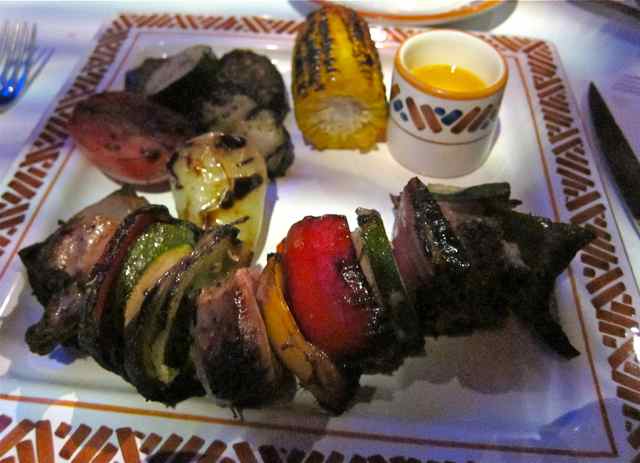
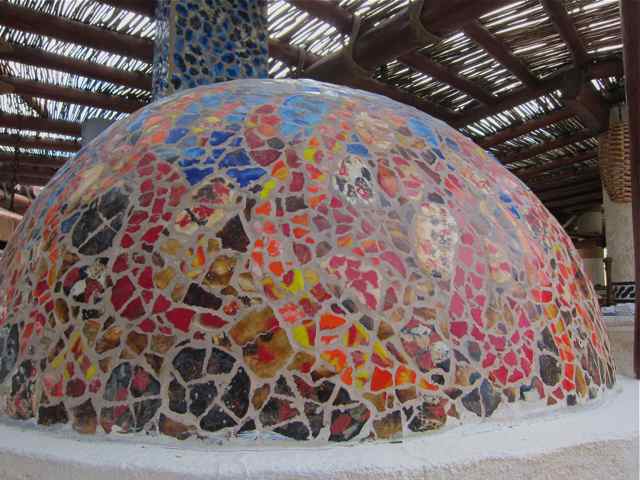
We stayed at a spectacular, but tranquil, resort located in the “corridor” between San Jose Del Cabo and Cabo San Lucas.  Set against stunning white sands, with both the Sea of Cortez and the Pacific Ocean in its backyard, Las Ventanas’ sprawling property includes several infinity pools, a luxurious spa and four award-winning restaurants.  The beautiful open air Sea Grill serves delicious meats and fresh seafoods prepared in a wood-burning grill and clay oven.  A fantastic lunch here woo-ed us back for independence day dinner and the breathtaking location provided us with an up-close view of some beautiful fireworks.


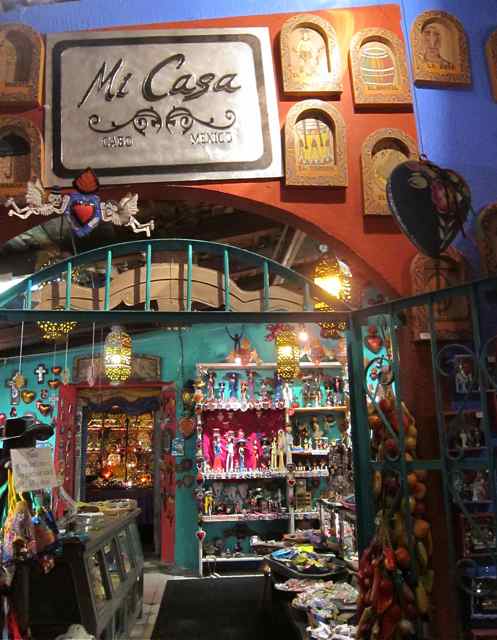
Mi Casa, a restaurant in central Cabo San Lucas, is another place we enjoyed.  Decorated with hundreds of wall hangings, quirky tequila bottles and traditional folklore, the restaurant’s entryway will fascinate and mesmerize, a highly desirable effect in case you are waiting for a table.  The place definitely has a touristy vibe with an entertaining mix of glamourous party-goers as well as the occasional mariachi or flower-seller.  The menu, though not super creative, is easily likable and the portions, quite large.  The service occurs at a leisurely pace but is extremely friendly; our waiter insisted on not charging us for our little touched ceviche (it was too tomato-ey).

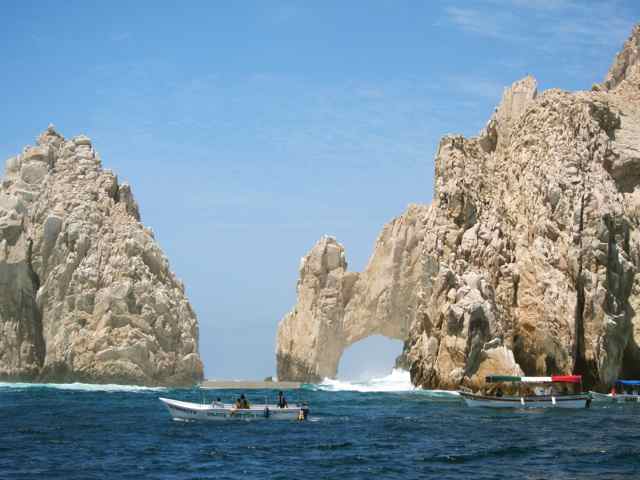
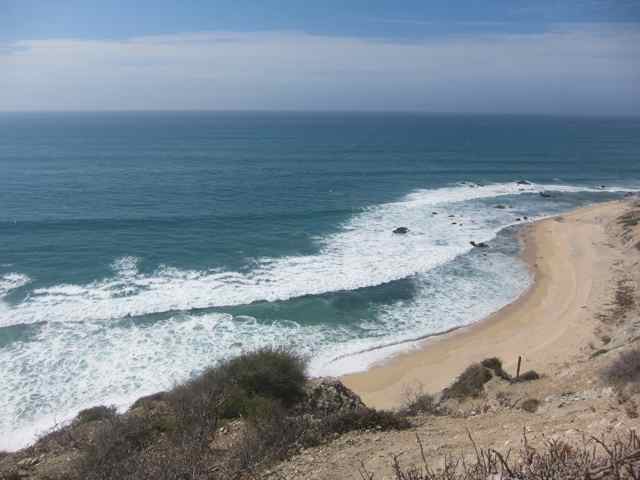
A big limitation of Cabo is that you cannot really swim in the ocean.  Not only is the Baja California Pacific choppy and cold, it is dominated by powerful undercurrents and a rocky coastline, making it extremely dangerous.  Keen for some snorkelling, we decided to join the Cabo Escape Cruise and head out to the calmer waters of Chileno Bay.  However, a hurricane from a few days earlier had brought cool weather to Cabo and as our ship set sail, we quickly realized it was going to be even cooler in the ocean breeze. An hour and a few pina coladas later, we arrived at our destination.  The crew had handed out snorkelling gear and life jackets and now, ready to explore the famous reef, we stood in line to jump in.  The water was FREEZING.  Not cold like tap water, but cold like ice water – what a shock!  It’s hard to breathe when your body is submerged in an ice bath but we somehow recovered and fought the current (yes, it was as strong as ever) to swim out to the “reef area”.  Hmmm… ten minutes later, we still weren’t seeing any fish.  I looked around and the few people who’d made it as far out as us also looked puzzled, searching earnestly for some sign of sea life.  The water was not only freezing and incredibly rough, it was murky and completely devoid of fish.  We swam back to the boat and climbed aboard only to learn that the hurricane had driven the fish out to warmer waters.  Hah!  The one group that had spotted a fish had been so elated that they’d started chasing it, busting out the waterproof cameras to capture this rare life form we’d all gone to so much trouble to see.  Hopefully this wasn’t an eerie glimpse into the post-BP future…

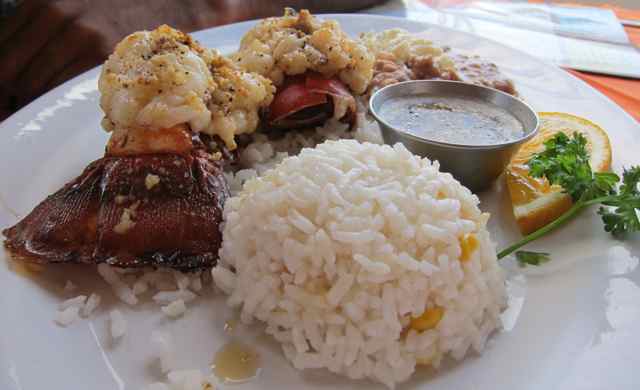
Snorkelling misadventures aside, Cabo really is fantastic.  After our cruise, we ended up having lunch at a wonderful lobster shack where we got talking with a Canadian couple who’d retired in Cabo 5 years ago. The husband’s deep sea fishing trips supply them with an abundance of fresh marlin and they’d had their latest catch prepared by the restaurant as ceviche – a happy retired life indeed. We spent the next day driving ATVs through the desert and exploring hidden beaches along the (calmer) Sea of Cortez; it more than compensated for the choppy Pacific.  So, if you’re looking for white sands, beautiful resorts, dramatic landscapes and fantastic food, consider Cabo.  Just hope that you get there before a cold-weather hurricane.

A Fortnight in Fog City

I’ve been in San Francisco nearly two weeks now (time flies!) and am thoroughly enjoying what’s looking to be a fantastic summer. After a couple of do-nothing days in NYC, I flew out to join the bf who, conveniently, will be spending the next month or so in SF for work.

We’re staying in Nob Hill which, as the name suggests, is no friend to the faint hearted. My first week here, I nearly died climbing up the steep incline that leads home. I’m getting better at it but continue to be overtaken by pesky locals who make climbing a 60 degree gradient look like sliding on ice. I have also learned that wearing heels in SF is social suicide (you *will* get left behind).

From Nob Hill, it takes me about 40 minutes to get to the tech start up I’ve been working at, located on yet another, [Potrero] Hill. The Muni is certainly not the finest public transport I’ve taken, but at $2 each way, I really can’t complain. So many friends are spending ~3 hours/day driving back and forth from the Valley that I’m pretty happy to be able to re-discover Milan Kundera on the train.

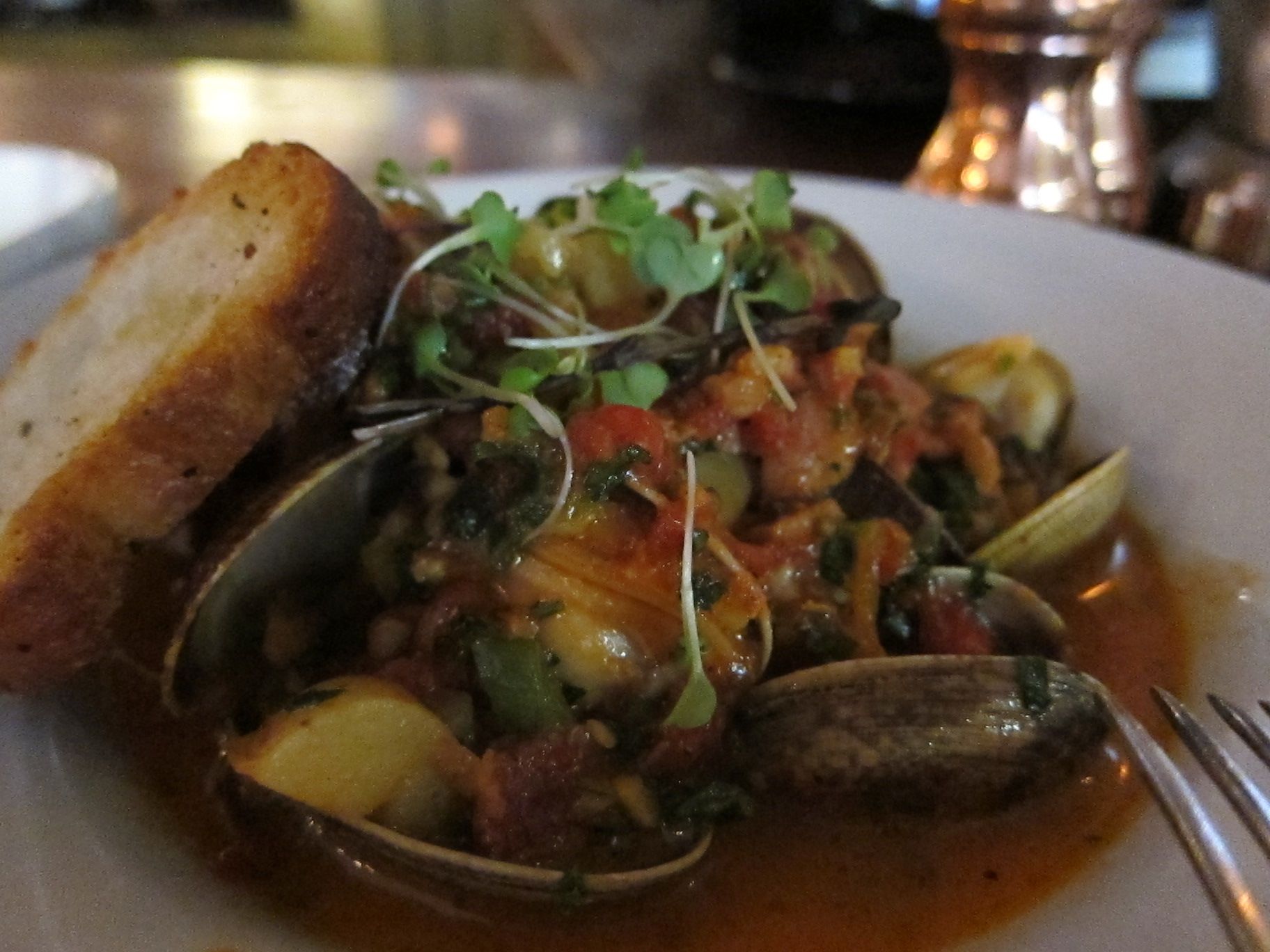
Anyway, on to the food! We’ve been oyster shucking, boatside brunching, farmer’s market-ing, tea tasting and generally face-stuffing and, so far, the City has not disappointed. More to come but here’s the low down on some great local restaurants.

Cafe Kati, a cute little place in Pac Heights offers a fun menu of Asian Fusion delights ranging from old classics like chicken lettuce cups to creative hits like peanut crusted prawns with green papaya, mint and fresh basil. The ambience is small, cosy and intimate. It feels a little like a quaint old bookstore. Service is friendly and the wine list is great. We tried the dragon roll, the prawns and the sliders – servings are bigger than you’d expect and the food is melt in the mouth delicious.
Damage: $70 for two, including drinks (but then we didn’t order entrees)

Next, we tried Frascati, a Mediterranean style bistro located on the corner of a lovely tree-lined street not far from where we live. There are a couple of very cute looking restaurants on this block, but Frascati stands out for a unique and seasonally fresh menu. The Duck Confit Salad was fabulously tasty, the Dungeness Salad good, but very small. The big let down came from the desserts. We ordered the bread pudding and the apple cobbler and both were giant sized portions of mediocre kitchen fare. Nothing memorable about them and certainly out of sync with the rest of the restaurant’s delicate, deliberate sensibility.

Another great restaurant tucked away on a quiet corner at the top of Nob Hill is Venticello, which means “soft breeze” in Italian. This hidden gem exudes old world romance and Tuscan charm. The lights are dim, the tones are warm, the tables are candle lit and the doors and windows are thrown open to the cool night air. The maitre’D was warm and welcoming and the service, prompt and professional. The Carpaccio and Polenta con Portobello were absolutely divine – creative, original and beautifully presented. The meat pasta was so-so and somewhat uninspiringly arranged in a plain white bowl. The dish of the night however, was definitely the veal Scallopini – absolutely to die for. Served with tiger prawns and a basil cream sauce, this is apparently their most popular dish and something I could not get enough of!

Back from the Dead [Sea]: HBS Israel Trek 2010

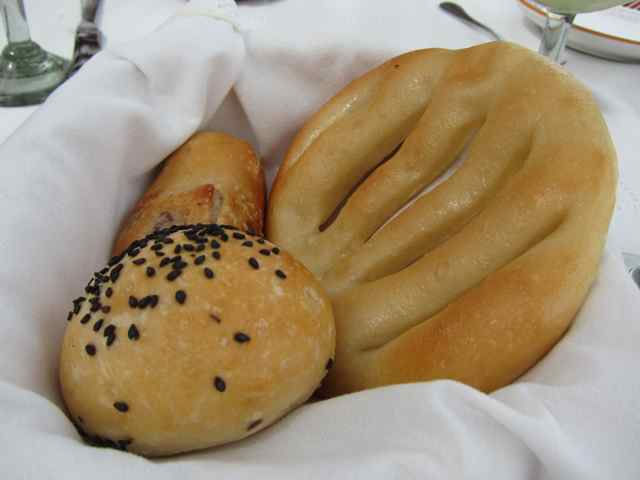
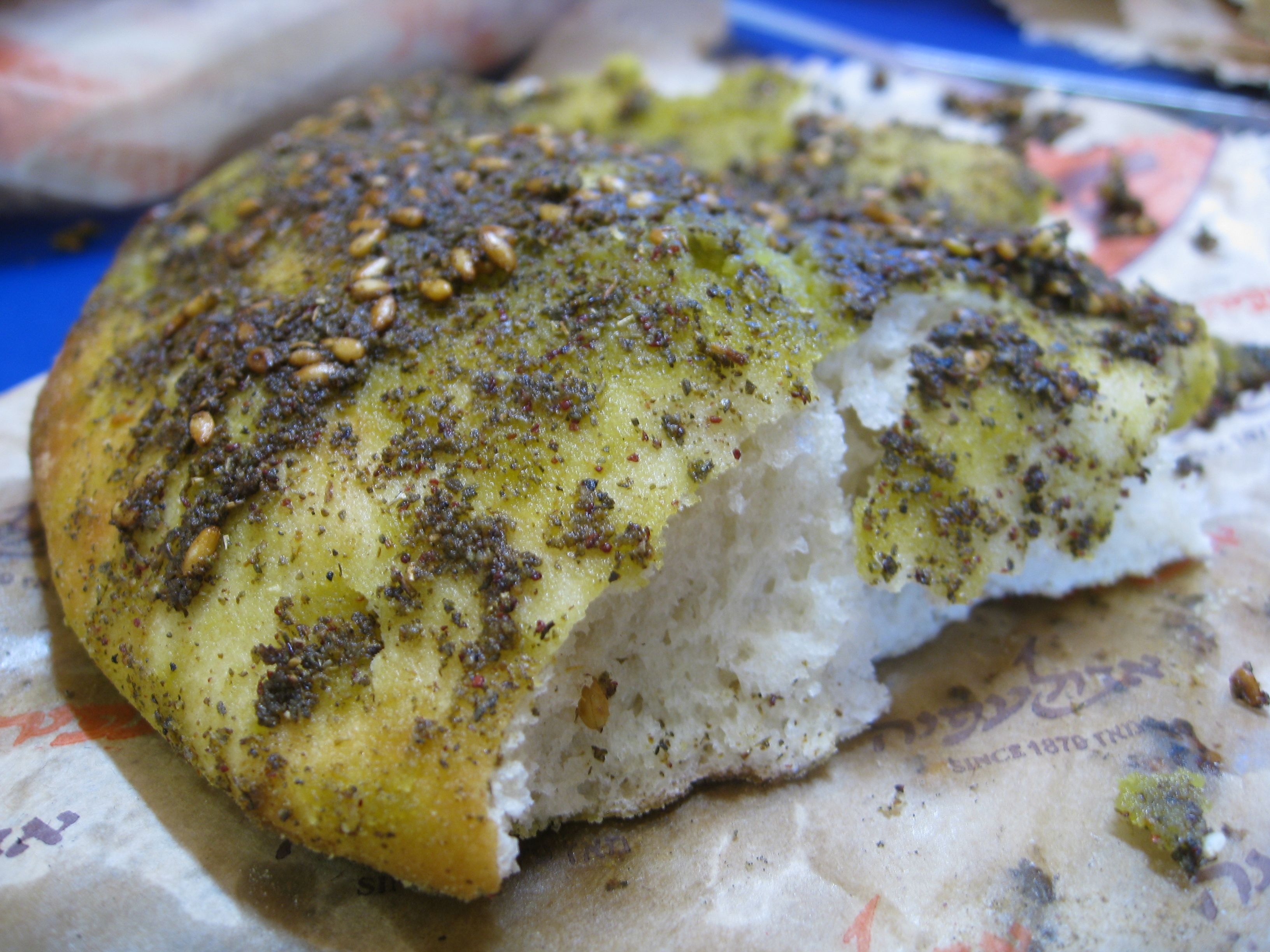
Fresh from the oven and doused in olive oil and za'atar - delicious

Israel is widely known as the promised land – the land of milk and honey. White sands glisten along dramatic coastlines, lush orchards of figs, pomegranates and olives litter ancient landscapes and beautiful partygoers throng vibrant resorts. But after ten days of intense travel with a group of 80 HBS students, Israel seems much more like a land of paradoxes – a complex blend of antiquity and modernity, religion and secularity, patriotism and rebellion.

The center of three major religions, Israel attracts millions of tourists each year. However, in spite of (or rather because of) its status as one of the holiest places on earth, this tiny strip of land has seen centuries of conflict, turmoil and bloodshed. After a drawn-out battle against the Palestinian Arabs, Israel declared independence in 1948, only to face fresh attacks from Jordan, Egypt, Syria, Iraq and Lebanon. The now famous Israeli Defense Forces were formally established on May 26, 1948 and, by March of the following year, the IDF had miraculously repelled Arab forces to secure Israel’s borders. Unfortunately this was not the end. During the 6 Day War of 1967, Israel pre-emptively attacked Egypt, Jordan and Syria to regain control of the Sinai Peninsula, the West Bank, the Golan Heights, the Gaza Strip and East Jerusalem. Egypt and Syria retaliated with a surprise attack in 1973, leading to thousands of casualties that highlighted Israel’s vulnerabilities and the need for peace in the Middle East. The Arab-Israeli conflict has persisted over the decades, manifesting itself in two wars with the PLO in Lebanon (1982 and 2006) and two Intifada uprisings in Palestinian territories (1987 and 2000). More recently, Israel imposed an embargo on the Gaza Strip after the territory fell under Hamas rule three years ago. Last week, a flotilla of 6 Turkish ships carrying 10,000 tons of aid for the impoverished Gaza Strip was intercepted by Israeli forces, causing a significant setback in relations with Turkey, a key ally in the Muslim world.

Given its political backdrop and religious tensions, I was surprised at how secular Israeli society actually feels. Jews, Christians and Muslims peacefully co-habit the densely populated Old City within Jerusalem and flyers promoting the latest clubs litter the glitzy boardwalks of Eilat. Hordes of sun-worshipping Tel Avivians flock to the sandy beaches of the Mediterranean and, with the exception of Shabbat (the day of rest), every hour in the city feels like it’s bursting with modern life. Our guide for the trip spoke fondly of King Hussein of Jordan and his work towards signing a landmark peace treaty with Israel.

“We are desperately seeking peace with our neighbours. If we can build more friendships in the region, we’d absolutely be willing to cede land.”

Even more encouraging was our Arab-Israeli taxi driver’s impassioned speech for peace. “The people of the West Bank are trapped in a dead-end society. They cannot work and they cannot leave. I grew up here, an Arab in Jerusalem, and I know that we, the people, want peace. We want this to end. It is the politicians who want the conflict.”

Another remarkable paradox of modern day Israel is the co-existence of a strong culture of rebellion with a mandatory conscription for both men and women to the IDF. Everywhere we went, Israelis spoke proudly of their distaste for authority and their passion for disagreeing with the status quo (regardless of what it is).

“We don’t queue in Israel. Life is all about cutting lines”.

The cultivation of this particular personality trait on a national level appears to have created psychological unity among the Israeli people (above and beyond religious and ethnic similarities) and, perhaps more importantly, spawned a culture of risk-taking and entrepreneurship. Interestingly, Israel’s enormous military budget (~9% of GDP vs. ~ 4% for the US) necessitated by its location in a hostile Middle East, has fueled a booming high tech industry and a desire by its people to “build something” rather than work in say, financial services.

Blessed with lush, dramatic landscapes, gorgeous beaches and delicious and wonderfully spicy food, it is hard not to fall in love with Israel. After four nights in Tel Aviv, two in Jerusalem, three in Eilat and one in Kfar Blum, we were averaging 4 hours of sleep and many more units of alcohol. Despite the exhaustion, the heat and the sensory overload, the thought of leaving “the Land” and the fabulous group of 80 crazy partners in crime, was quite a downer. Israeli people are wonderfully warm and incredibly hospitable and the idea of a ten hour red-eye with American plane food was far less appealing than a hot pitta filled with spicy hummus and perfectly crisped falafel 😉