Summer Veggie Quinoa Salad

We were hit by a monster storm earlier this week, but after all the rain, thunder and lightning, it feels like summer has finally arrived. The weather’s been beautifully warm all weekend, the light’s been golden and Bondi has been packed.

Photo by :: uge
Photo by :: uge

Early summer (and early fall) are my favorite times of year. It’s weird to think of mid-October as “early summer”, but that’s how life goes for us here in the Southern Hemisphere. I love this time of year not just for the weather, but for the food. Plump blueberries, bright strawberries, sweet papaya and juicy mangoes have flooded the market aisles. Fresh ears of corn, bunches of kale and piles of multi-coloured tomatoes are overflowing from their crates. Summer is a time of both abundance and lightness. It’s the perfect time for salad.

Here’s the all-star I whipped up today.
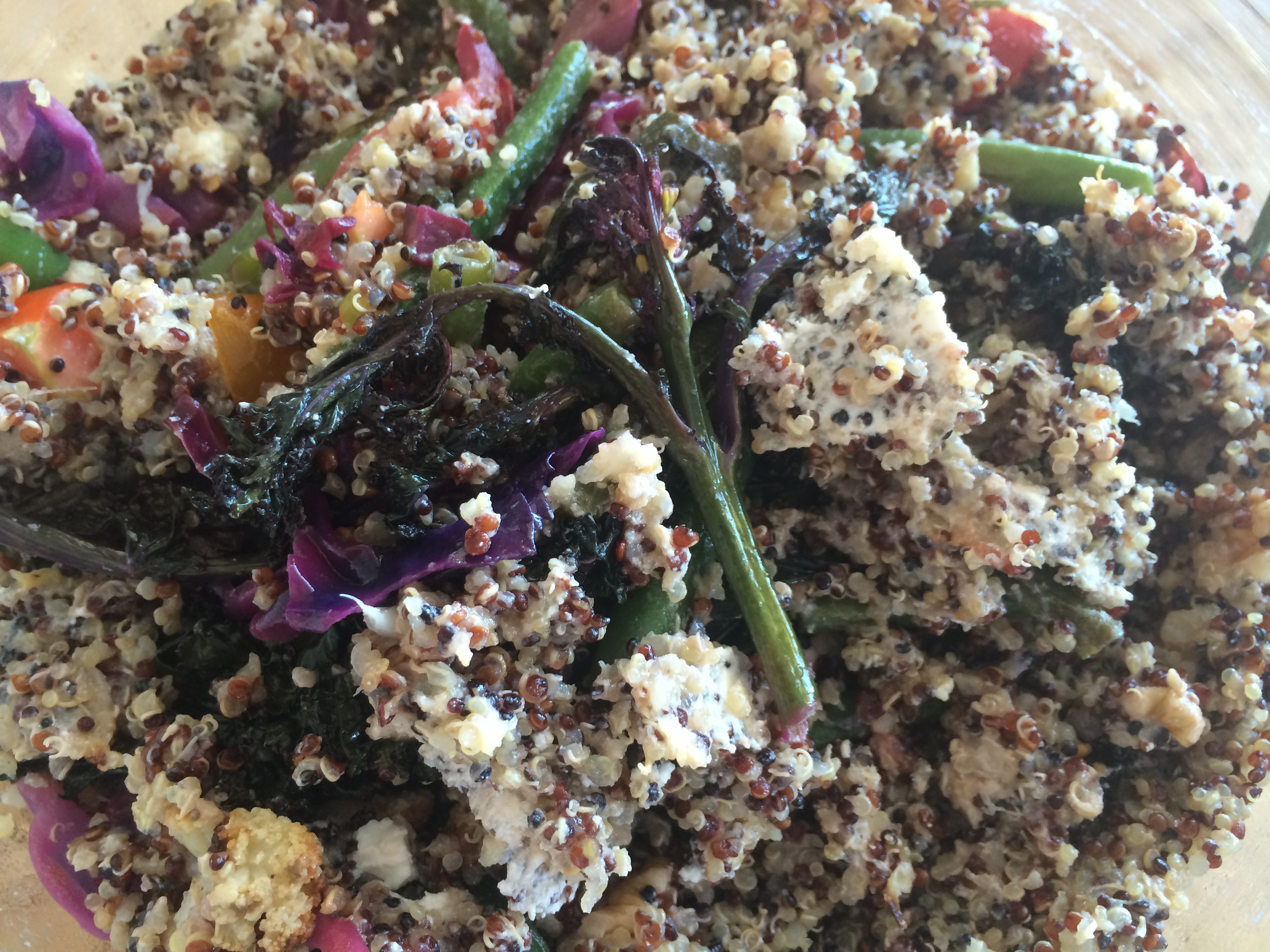
Photo Oct 19, 2 19 06 PM
Summer Veggie Quinoa Salad

Isn’t it pretty? I made a big batch and stuck it in the fridge. The worst thing, if you’re trying to eat healthy, is to come home from work or the gym, tired and hungry, and find yourself resorting to Thai delivery. I’ve been guilty of this many a time, so I now use my Sundays to prep for the week ahead and make sure I have something nutritious and filling on hand.

This salad is completely vegetarian and uses quinoa as the base, which means it’ll stay good in the fridge for several days. Quinoa, in case you’ve been living under a rock, is loaded with protein, fiber and minerals. It’s also gluten-free and low GI, which means it’ll keep you feeling full longer. Quinoa is so nutritious that it’s been designated a “super-crop” (not just a super food!) by the UN Food and Agriculture Organization. Demand for the seed has exploded over the last few years and led to price swings and short supply. If you’re cooking with quinoa for the first time, the most important thing to keep in mind is to wash it extremely thoroughly. Unwashed quinoa is coated in saponin, a bitter-tasting substance that protects it from birds and insects. Warning: cooking your quinoa without first giving it a good rinse may result in an unhappy stomach!
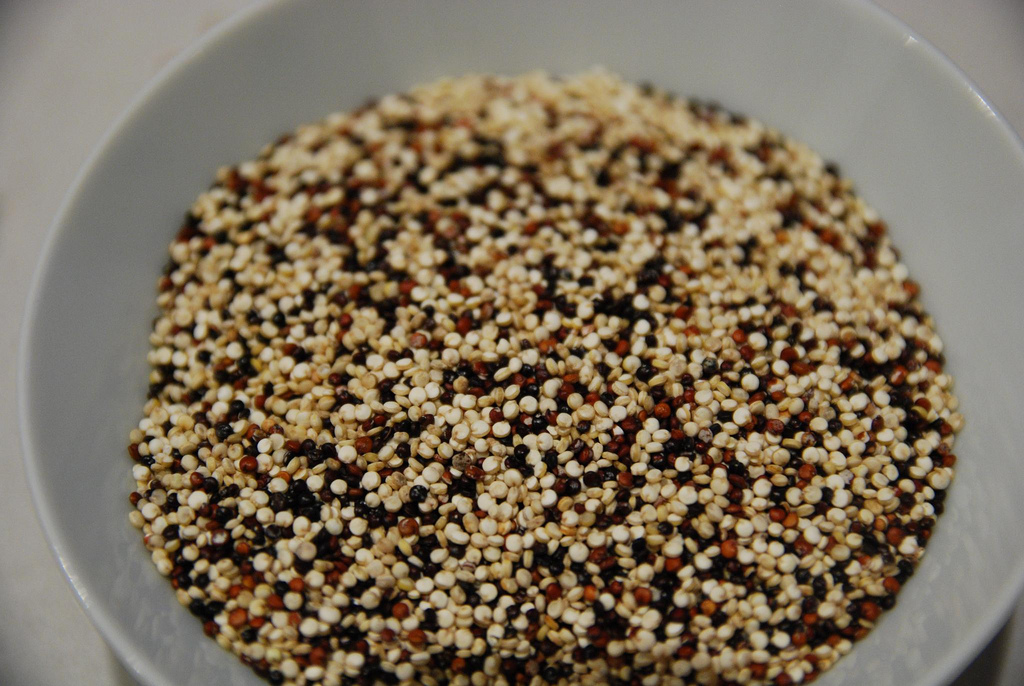
tricolour_quinoa
I use a mix of red, white & black quinoa for a lovely nutty flavor and crunchy texture

Alright, disclaimers done, let’s dive in:

Ingredients

  • 2-3 cups of quinoa
  • 4 cups of water (or vegetable broth)
  • 3-4 cups of your favorite summer vegetables (I used a handful of baby roma and yellow grape tomatoes, some green beans, a bunch of purple baby kale, one small cauliflower, four zucchinis and one cup of red cabbage)
  • Persian feta (you could also use goat cheese)
  • Crushed walnuts
  • Garlic and ginger paste
  • Olive oil

Method

Rinse the quinoa thoroughly and place in a big pot with roughly twice the amount of water. I like to throw in a cube of vegetable bouillon once the water heats up. It brings a wonderful flavor to the quinoa and makes it delicious by itself. You could also use homemade veggie stock if you prefer. To cook the quinoa, bring the water to a boil and simmer on low heat until all of it has been absorbed (about 15 minutes).  Fluff and set aside in a big bowl.

In the meantime, prep your veggies. I like to roast my zucchini and cauliflower with a little bit of olive oil, salt and curry powder.  I recently discovered this deceptively simple roasted cauliflower recipe by Summer Tomato and it’s become my go-to. It involves first steaming the cauliflower by covering the roasting tray with some foil and then roasting uncovered to get the florets all brown and crispy. Yum!

This whole process should take you about 20 minutes. I must warn you though that, at this point, you’ll be tempted to devour your delicious roast veggies and leave nothing for your salad. Don’t panic! Just remember to make a bigger batch so that you have enough for now and for later 🙂

Now for the other veggies. When it comes to green beans, I like to blanch them: throw them into a pot of boiling water with some salt, drain with a slotted spoon after 2 minutes and plunge into an ice bath to halt the cooking. Set aside.

Next, throw some olive oil, garlic and ginger paste into a frying or sauté pan and drop in the green beans, the thinly sliced red cabbage and a handful of kale. I used baby purple kale because it doesn’t need slicing or de-stemming and cooks faster than regular kale. Add some salt and give your veggies a good stir. Cook until the cabbage and kale are wilted and tender (5-10 minutes).
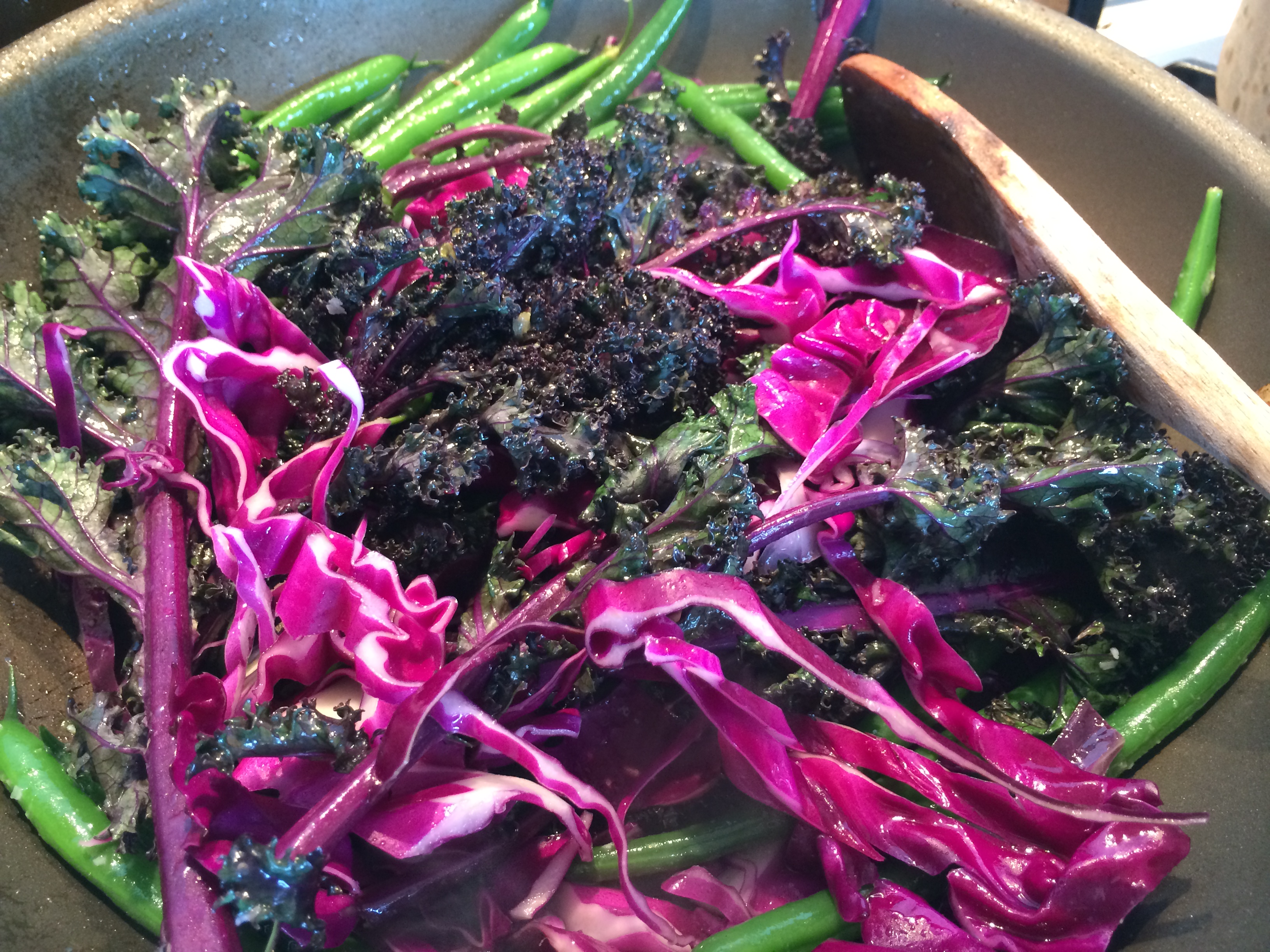
Photo Oct 19, 12 40 24 PM
I love these colors

Time to assemble your masterpiece! The quinoa should be nice and cool by now. Crumble a handful of walnuts (or almonds) and stir them through. Next, add your sauteed kale, cabbage and green beans and mix in your roasted cauliflower, zucchini and fresh halved tomatoes. The juices from the veggies will add some depth to the flavor, but we’re not done yet: crack open that jar of Persian Feta and scoop out a big hunk.

Photo Oct 20, 5 56 58 PM
Persian Feta is spelled with two ‘t’s, so as not to upset the Greeks 😉

I’m obsessed with Persian Feta. It’s very popular in Australia and is basically a marinated, less salty and more versatile version of its Greek cousin  — I eat it slathered on Turkish bread, on kebabs / in wraps and as a dip. It works perfectly in this salad because it’s creamy and flavorful but retains its form as you distribute it through the quinoa and veggies. Harris Farms does a beautiful Persian Feta with garlic and dill (not pictured), but if you aren’t able to get it locally, you could sub it with goat cheese or you might consider making your own. A fellow blogger in Paris has an easy guide to marinated feta right here.
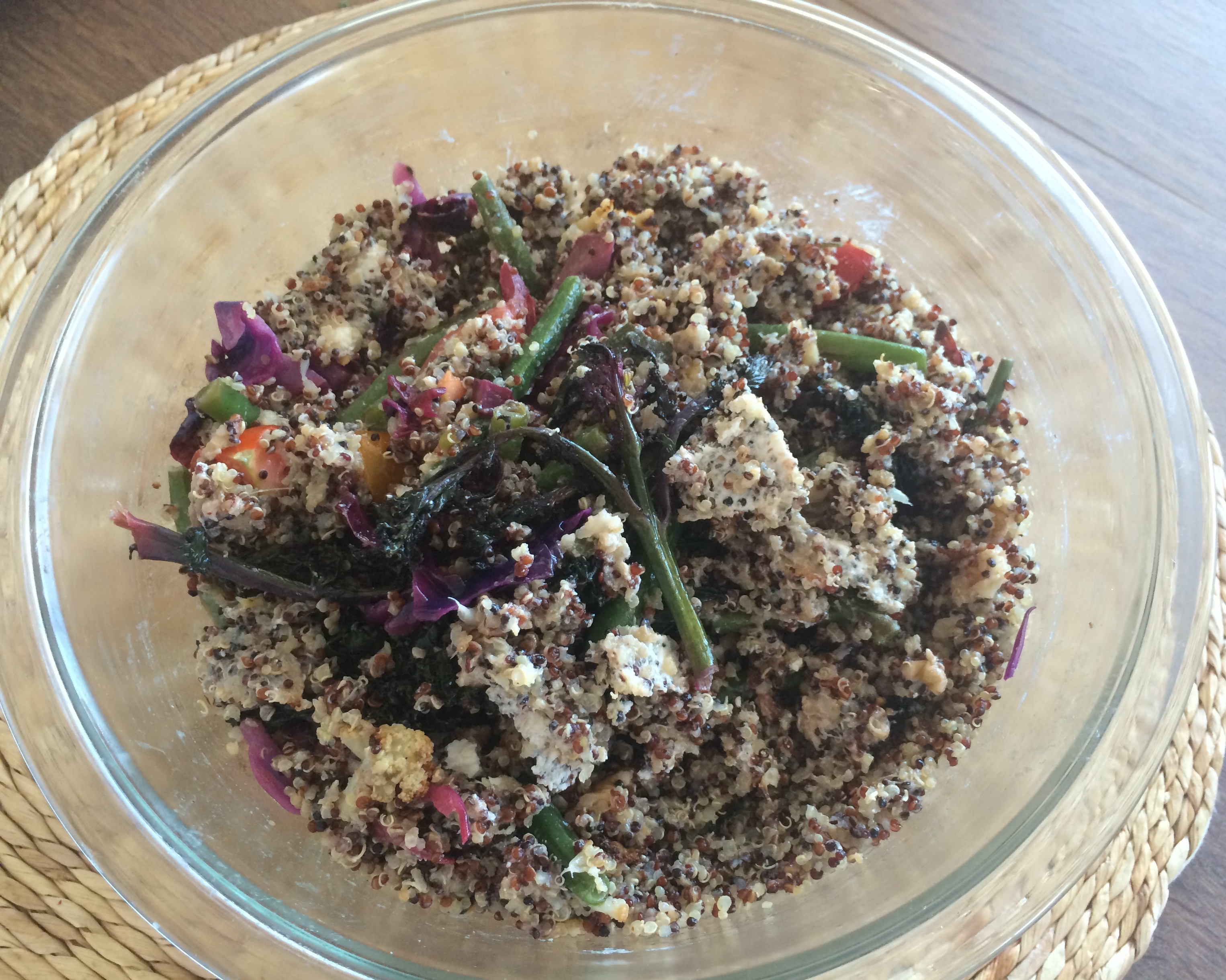
Give the whole thing a nice big stir and voilà! Your salad is ready to devour (or to cover and store in the fridge for later). Enjoy 🙂

Getting sick when you’re travelling

I just got back from a week in Singapore and Vietnam.  As excited as I was for my first work trip to Asia since moving down under, I wasn’t prepared for the bout of illness that came with it.  A sore throat grew into a nasty fever, the fever left me with a terrible cold and the cold gave way to one of those coughs that you wouldnt want to be caught dead with in public.  I spent a couple of days cooped up in the hotel room, watching daytime soaps and CNN but mostly I slept and ate pho.  Getting sick is never fun.  Getting sick in a foreign country can be downright scary.

The last time I got really sick on a trip was in 2009. I had quit my job in finance and was spending the summer travelling around South America with two of my future b-school classmates. After a month of schlepping though hostels, we were splurging on the Sheraton in Iguazu for our last stop. We’d started to feel under the weather in Buenos Aires and were looking forward to some R&R in more comfortable digs.

Unfortunately, it wasn’t long before my tiredness evolved into a raging fever. I decided to skip out of the day’s plans and stay in bed. I barely had the energy to get out of bed and on the one occasion that I did, I blacked out. When I came to, I was sitting on the cold floor and realised to my relief that I hadn’t hit anything hard. I sat there a few more minutes, before I could summon the strength to get up and dial the front desk.

Hours later, a nurse showed up.  He was the only qualified “medic” in the area and his professional advice was to “drink lots of fluids, take paracetemol and rest”.  No meds, no antibiotics, nothing.  I don’t think there was a pharmacy for miles.

The other girls returned and the three of us grappled with our symptoms while staring at the news in our hotel room. It soon dawned on us that this was no ordinary bug: this was sweeping the world, this was H1N1.

Being taken out by H1N1 in a remote town, in Argentina, a few weeks before business school was scary. We worried that we wouldn’t be well enough to travel back to the States or, worse still, be quarantined.  The only thing I felt grateful for was that we were in a hotel room rather than on one of the gruelling hikes we’d been ploughing through weeks earlier.

48 hours later, we managed to get on a flight home. In retrospect wasn’t the best thing for containing the disease but was the best thing for getting us on the path to recovery. It took another week of lying around doing nothing before I felt better. I lost 5 lbs in about 10 days.

A few lessons from dealing with sickness abroad:

  • Carry a first aid kit: Duh! Throw some throat lozenges in there, make sure you have some advil / paracetamol / panadol, some sort of tums, bandaids, maybe some immodium, some neosporin “the basics”.  As obvious  as this is, how many people actually travel with a first aid kit? When in a group, there’s always someone miraculously carrying everything you need; when you’re travelling alone, you have to have your own back. Getting sick isn’t the first thing we think of when we’re going on vacation or on a business trip.  I now leave a ziplock of basic meds in my standard bags.
  • Medicate: Step 2 from above: use your meds (wisely).  If you’ve forgotten your first aid kit and you’re somewhere reasonably “foreign” e.g. you don’t speak the language or you’re in a developing country with unfamiliar medical facilities, it can be very tempting to just lay in bed and hope that whatever you have will pass. Don’t! Symptomatic care is valid so take what you need to give yourself some respite. Leverage the hotel: oftentimes they’ll have basic meds on hand or can send someone to pick up what you need. Worst case, they can direct you to a nearby pharmacy and write down what you need.
  • Know when to escalate: a lot of people and a lot of blogs will recommend that you head to a medical center at the first signs of illness when travelling. The thing is, oftentimes, there IS no nearby medical center. Other times, you already know exactly what you have (“a cold”, “food poisoning”) and you can handle it with OTC drugs. Or sometimes, you’re alone, don’t speak the language and are just too sick to go and sit in a waiting room for hours on end. So, what do you do?  If you’re in a country that still does house calls, ask your hotel if they can help arrange one.  If not, see if someone from their staff will accompany you to a clinic and act as a translator.  If you’ve been injured, had an unrelenting fever for more than 24 hours or if your symptoms are getting worse, you should seek medical attention.  It’s worth summoning the energy and effort to trek out to a hospital.
  • Tea, juice, water, soup: stock up on it, raid the mini bar, order it off room service, do whatever it takes to get those liquids into you. Hydration is key.
  • Keep the phone close: Keep your cellphone charged and the hotel phone handy. Know your emergency numbers.
  • Turn off the AC: I hate air conditioners. I’m convinced my latest illness was caused by germs circulated by the hotel AC.  Having it on even briefly would exacerbate my symptoms in seconds. I went cold turkey sans AC in 30C Saigon for two full days and I think it expedited my recovery.
  • Get some air: Keep the room well ventilated or, if you feel up to it, go for a short walk, fresh air does wonders.
  • Conserve energy: if you’re feeling weak, running a fever or otherwise having trouble moving, stay put! Make the most of your hotel amenities: use room service, ask for extra pillows / blankets, rent a stack of movies.  Extend your stay or do whatever’s necessary to avoid the additional strain of travelling until you’re recovered.

Stay healthy! x

Note: This is based on my personal experience and is in no way intended to replace medical advice. If in doubt, you should seek the advice of a medical professional.  

Giving thanks, down under

I won’t lie, we missed not being in the US for Thanksgiving.  I didn’t particularly expect the feeling; I’ve only been part of five or so Thanksgivings and one of them was in England.  But, seeing my Facebook newsfeed over-run with pictures of turkey and messages of thanks, I definitely felt some pangs for pumpkin pie and the sights and smells of fall.

Sooo, after a particularly un-Thanksgivingy dinner that Thursday, we decided to turn our Sunday BBQ plans into Sunday Thanksgiving plans and show our Aussie friends a true American tradition: pumpkin cheesecake, cornbread, turkey, stuffing and root vegetables,

Easier said than done.  After trips to Harris Farms, IGA, Woolworths and Coles, all hopes of finding canned pumpkin in Sydney went out the window.  Heck, we couldn’t even find a fresh pumpkin (nope, butternut squash doesn’t count). Along with pumpkin, we jettisoned the idea of fresh cranberries and cornmeal. D’oh! Defeated, we were sitting outside Coles in Bondi Junction at 7pm when Niraj had the idea to make a sweet potato pie instead. Say what? I know it’s a popular Thanksgiving dish, but the thought of putting potatoes in a dessert pie had never caught my attention.  We pulled up a celebrity chef’s scathing review of a sweet potato pie recipe that was “too similar to pumpkin” — bingo. I ran back inside Woolies and grabbed an armful of sweet potatoes and a spring form pie dish.  We were ready.

I think we spent a good 4 or 5 hours in the kitchen that night.

The pie ended up taking longer than usual because I made the crust from scratch. I used a classic Martha Stewart recipe that seemed simple enough but took its sweet time. Scalloping the edges of the crust was tricky in a spring form dish, but it came together. More importantly, it tasted just like pumpkin pie! I shall definitely be making this again.  An added bonus is that it requires less sugar (sweet potato is naturally sweeter than pumpkin).  Here’s the delicious Paula Deen recipe I followed (nixed the marzipan).

The cornbread, in comparison, was quick and easy.  I ended up making a couple of batches — a more traditional one and one with parmesan and jalapenos.  Pro tip: if you’re living down under and don’t have access to cornmeal, do not resort to cornflour, use polenta instead.  Cornflour is much finer and used as a thickener in soups; polenta isn’t quite as coarse as cornmeal but at least your cornbread will look and taste almost exactly like the American version.

Niraj’s magnum opus was the stuffing. He decided to make it in the crockpot this year and we snuck in quite a few bites during its journey from frying pan to slow cooker.

Add a watermelon and haloumi salad (to-die for recipe from a fellow halloumiholic), a dish of roasted root vegetables, a cheese plate and of course, the turkey, and you’re done. Happy Thanksgiving!

Six foods that are all the rage in Sydney

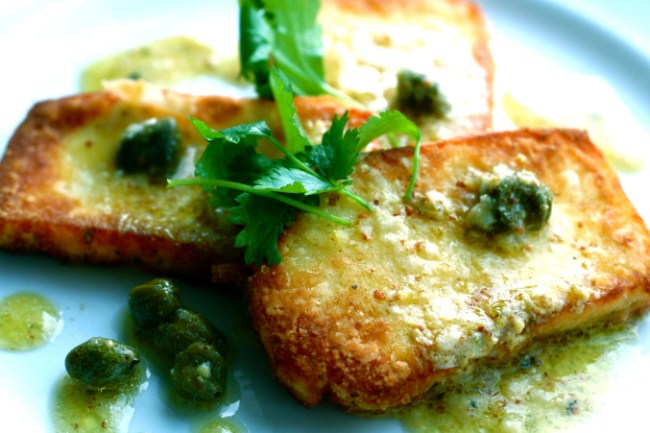
1. Halloumi. 

Image
Picture from foodytwoshoes.com

This salty, springy cheese hails from Cyprus and has been popular in the area encompassing Greece, Turkey, Lebanon, Syria and Jordan since the Byzantine era.  Wikipedia notes “Halloumi has recently become very popular in the United Kingdom.” Yup, an article in the BBC this past September attempts to address how halloumi took over the UK, elevating itself from a niche grocery store product to a staple at summer BBQs.

Add Sydney to the list.  Wherever you go, you’ll delight at spotting this salty, squeaky cheese on Sydney menus — whether in place of meat in burgers and sandwiches, as an ingredient in fresh salads (especially with watermelon) or on its own, as a side, grilled and dripping with flavour. My favourite halloumi in the city is in the form of Bondi Massive’s delectable pesto and halloumi sammy.

2. Muesli

Image
Picture from thekitchn.com

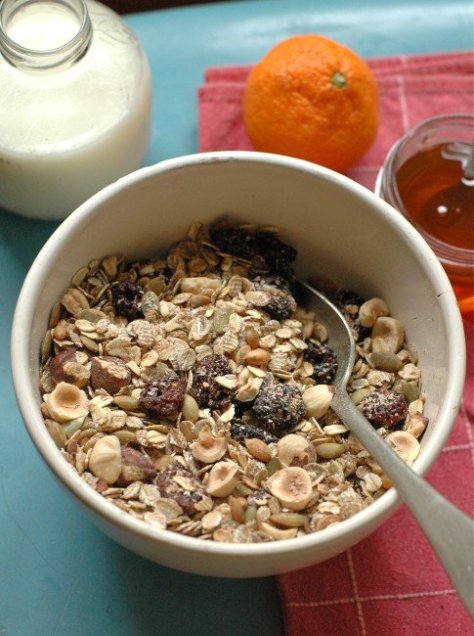
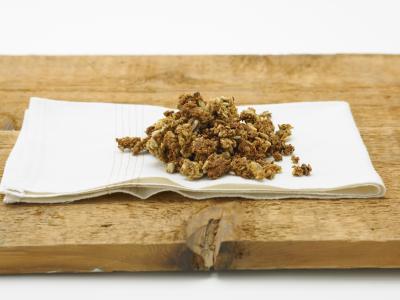
I’ve written about muesli a couple of times but it bears noting as a staple in Sydney.  Whether you’re in line for your morning cuppa or you’re browsing your local supermarket, muesli jumps out at you from every corner.  As in England, muesli is the king of breakfast here, beating back the efforts of that sugary sweet poster child for American healthy eating, otherwise known as granola.  Just so we’re on the same page, here’s the difference:

Image
Picture from Livestrong.com
  • Muesli and granola were both developed in the late 1800s in different parts of the world.  Muesli was developed by Swiss-German physician and nutritionist Max Bircher-Benner as a natural, raw food to help his patients during convalescence.  Granola was developed by Dr. James Caleb Jackson at the Jackson Sanitarium in New York.
  • Muesli is unbaked and doesn’t contain sweetener or oil.  Granola on the other hand usually contains one or more of maple syrup, brown sugar or honey as well as vegetable oil or butter.
  • Granola is typically harder than muesli.  The sweeteners in granola cause the oats, seeds and other goodies to clump together and, harden into sugary clusters.  While this gives granola that satisfying crunch and pretty glaze, it also gives it that tendency to get stuck in our teeth.
  • In other words, compared cup for cup as an average of all brands, muesli has 289 calories whereas granola has a whopping 500+ calories. A few interesting reports from Livestrong and Shape.

If that isn’t enough reason to switch, check out this delicious bircher muesli recipe by My New Roots.

3. Chia Seeds

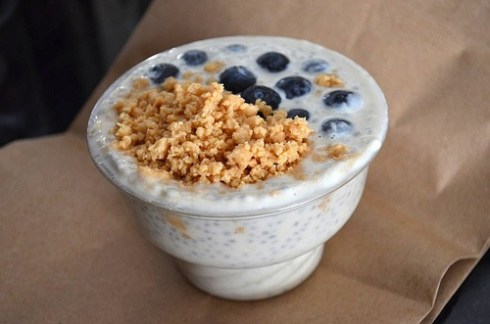
I first came across chia seeds a few blocks from my old New York apartment in the West Village.  There is a deliciously quaint store on Carmine Street called Victory Garden that specializes in locally sourced goats milk, mastic and chia seed products.  They’re better known for their goat’s milk soft serve ice cream (check out their foursquare photo feed) but Victory Garden makes a to-die-for chia seed parfait that I’ve indulged in after many a morning workout, despite lingering doubts about where it falls on the healthy breakfast vs. dessert pudding spectrum.  The parfait is made with cashew milk and sweetened with a hint of agave.

Image
Victory Garden’s delicious chia seed parfait.  Pic by seriouseats.com

Anyway, I was intrigued to learn that chia seeds have had quite the impact on the Sydney food scene, with a conspicuous presence in breakfast foods, desserts and the ubiquitous grocery aisle.  I’m still figuring out how to reconstruct that delicious parfait, but in the meantime, I’ve incorporated this uber super food into my weekend breakfast drinks.

4. Passionfruit

Image
Passiflora Edulis: the other worldly flower of the passionfruit

Sydney, or Australia really, has an abundance of passionfruit.  You can buy three fresh passionfruit for $2 at Harris Farms (Sydney’s answer to Whole Foods) and any crunchy grocery store will have its own version of homemade yoghurt with fresh passionfruit. You’ll also encounter passionfruit in Sydney desserts (especially pavlova) and cocktails.

Coming from the US, where passionfruit sits squarely in the exotic category alongside mangoes (also somewhat more common here) it’s been a real treat to indulge in them here.

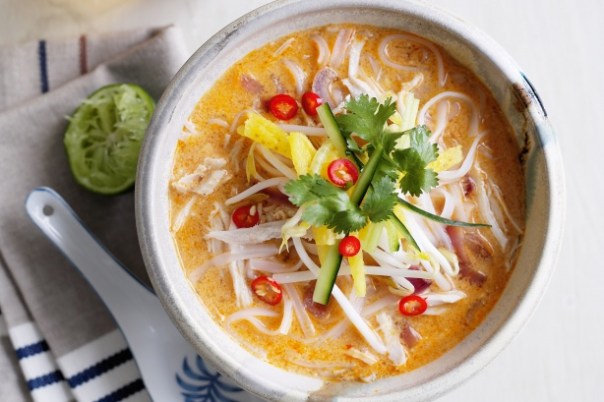
5. Laksa

Image
Get the recipe at taste.com.au

The first time I had laksa in New York, I was at Double Crown, sampling, what can only be described with political incorrectness, as their colonial British menu. It was tangy, spicy, smooth and delicious.  I loved it.  Funny then how you can find laksa on every street corner in Sydney’s CBD.  It’s so mainstream that the popular Aussie salad bar chain “Sumo Salad” offers it on their health-conscious menu.  Laksa is popular in Singapore, Malaysia and Indonesia and comes in a variety of preparations.  The kind I’ve sampled in Sydney is a rich coconut-based soup with thick noodles, prawns and a dollop of sambal.  It’s probably more popular with chicken.

While Laksa is an example of a popular Asian dish here in Sydney that isn’t (or doesn’t seem to have made it) big in the States, I could replace this point with an entire category of Asian food.  Central Sydney is an Asian food lover’s paradise with everything from fresh dumplings, “yum cha” (dim sum) and hand pulled noodles to elaborate duck and seafood preparations.  Thai, Malay, and Singaporean dishes, in particular, have more of a representation here than in New York.

6. Spices

Image
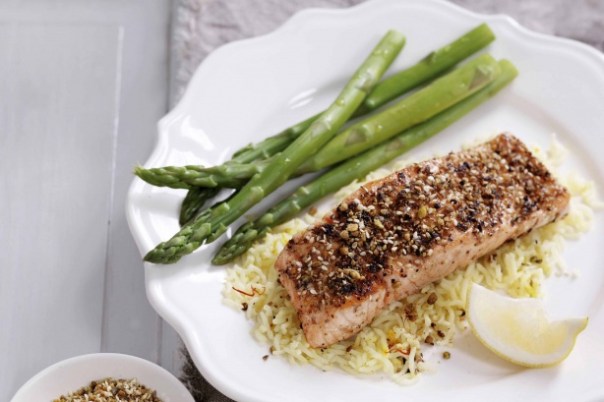
Dukkah-crusted salmon, recipe at taste.com.au

A bit broad and not technically “a food”, but I’m not sure how to put this other than to say Sydneysiders are the kings of spice.  Harissa, DukkahChermoula and Sambal are all fairly mainstream here and, again, feature prominently on both restaurant menus as well as in supermarket aisles.  Dukkah crusted salmon, in particular, is a popular dish that springs to mind.  I’m not complaining.  Although our small fridge coupled with my husband’s love for collecting condiments may soon lead to some challenges…

Bondi Farmers’ Market

After recommendations from several friends, last weekend we finally checked out Bondi Farmers Market… and immediately regretted not having come sooner!  Down on the south end of Campbell Parade, next to the public school, the market has food and organic produce every Saturday morning till 1pm.  We were more in search of groceries than snacks when we arrived, but ended up partaking in many of the below.  This is as good as (possibly even better?) than the San Francisco Ferry Building Farmers’ Market, which is saying a lot 😉