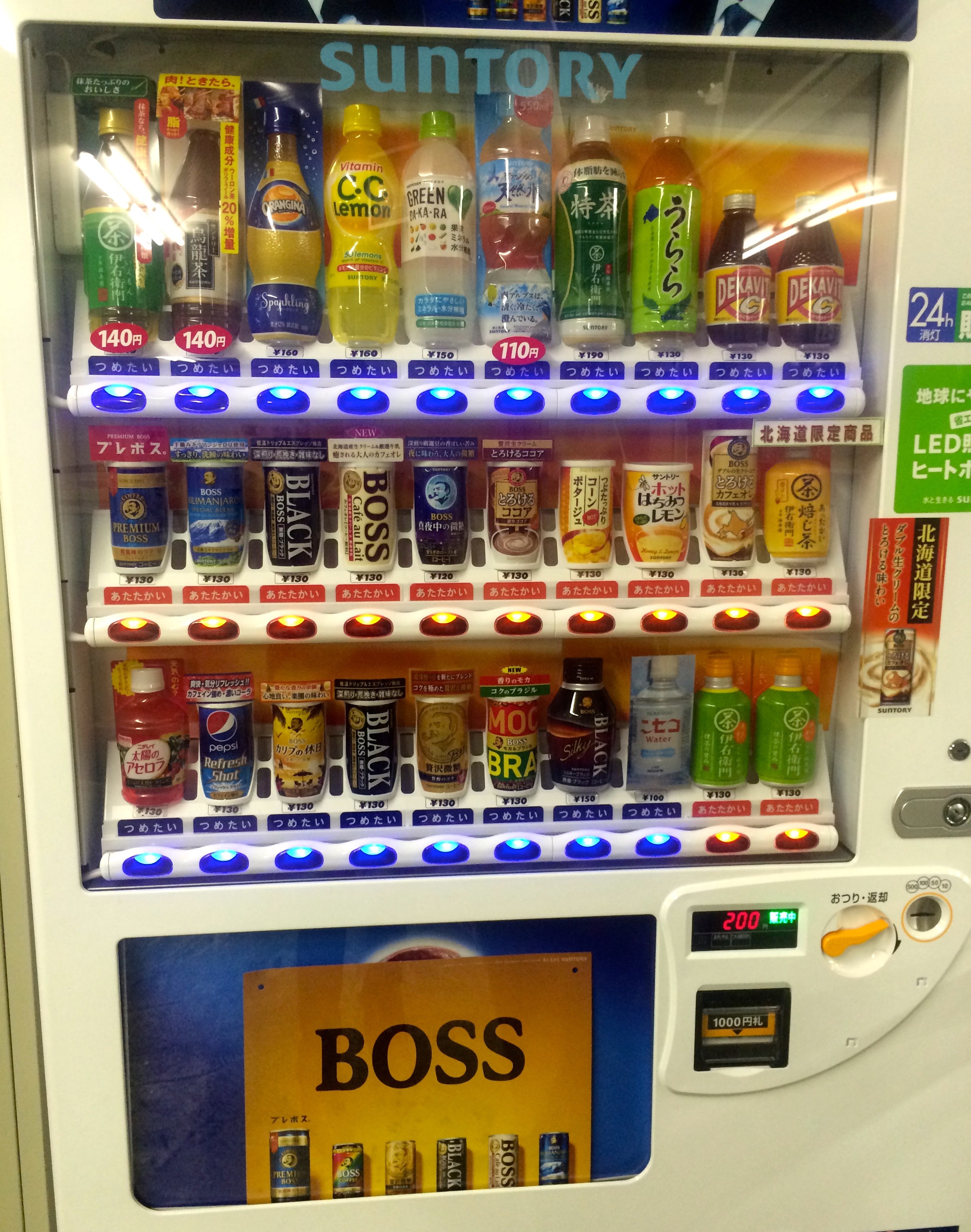
We’ve recently returned from 12 days in Japan and what’s been one of the most remarkable trips of my life. As a Nippon first timer, I was, as expected, floored by the meticulousness of the Japanese, by their mind-blowing food and their ubiquitous vending machines that hail from the future and spit out perfectly hot drinks.
As you feed coins into the machine, the blinkers light up to tell you which drinks you can afford: blue means cold, red means hot
What really captivated me however, was how Japan has managed to straddle old and new — seamlessly marrying its rich cultural heritage and regard for custom with its place as a leader in the modern world. Japan has some of the world’s fastest trains, bustles with the world’s largest metropolitan area, has the world’s longest life expectancy and even boasts the world’s most advanced toilets (they’re also very clean) yet, on a quiet afternoon in Kyoto, if you look closely, you can spot a real Geisha hurrying to her next appointment in full costume. You can still find traditional Japanese tea ceremonies and stay in traditional ryokans and you’ll encounter sushi masters who’ve earned their Michelin stars, not by experimenting with the avant garde, but by adhering to Edo tradition and even shunning all modern appliances.
Our traditional ryokan in Kyoto
As decorative as it looks, this was a fully functional sink carved out of solid wood
In contrast, Ginza reminds me a lot of Midtown Manhattan
Ginza’s “Metropolitan luxury” as described by the Tokyo metro map
A focal point of our trip, of course, was the food (so far, you can read about Sukiyabashi Jiro, Robataya Roppongi and Gontran Cherrier). Japanese cuisine is as diverse as it is divine, and we had the opportunity to partake in everything from street eats like ramen and yakitori to high-end sushi and kaiseki. A standout meal and longstanding dream was lunch at Sukiyabashi Jiro, which we finished in a record 30 minutes on our last day. As incredible as that was, my favourite meal (probably of all time) was at the hands of the husband-wife duo behind Sushi Sawada: a tiny, 6-person restaurant in yet another nondescript, shiny Ginza highrise. No possible combination of words could do the experience justice (but I’ll try, so stay tuned).
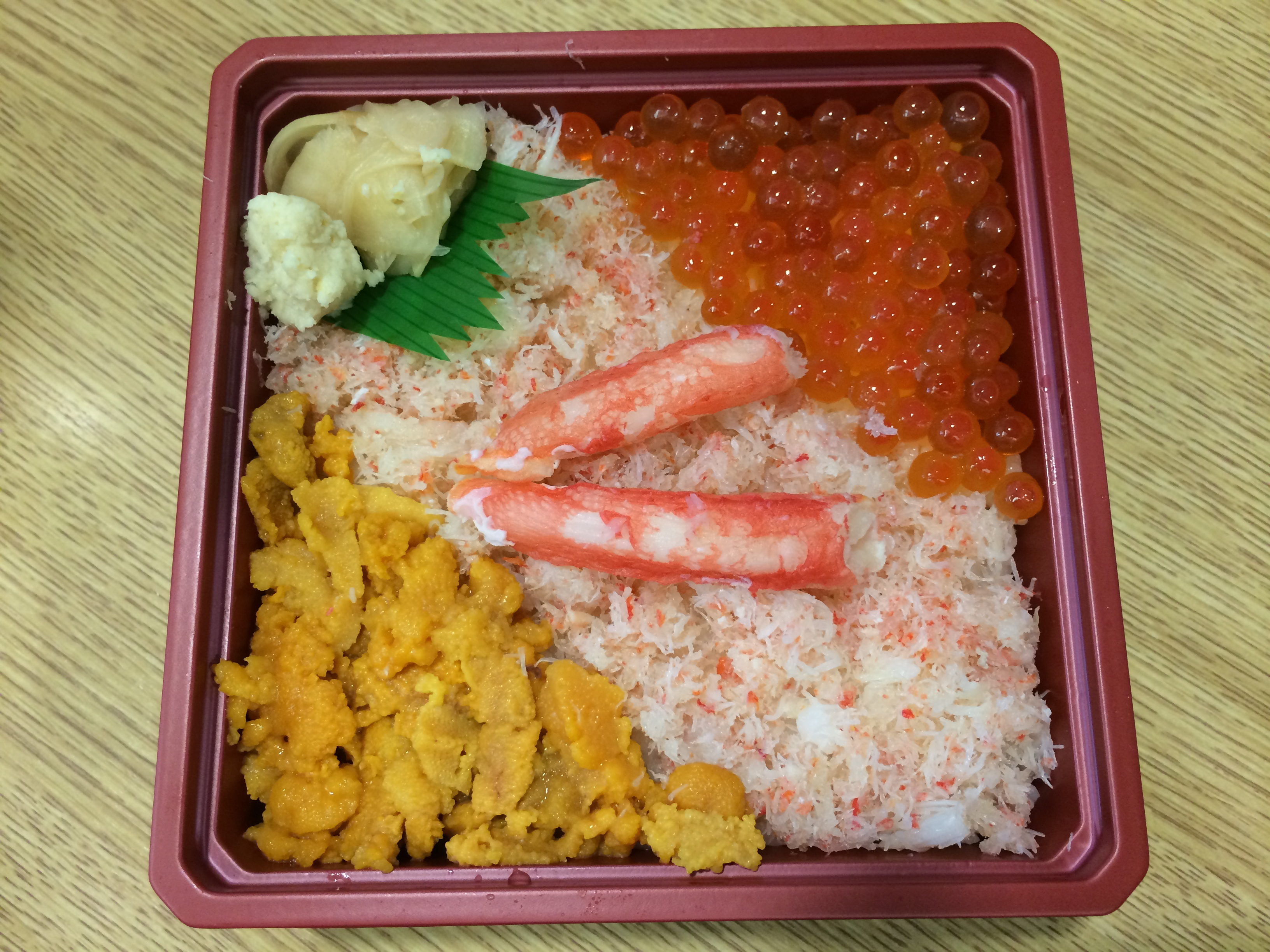
Outside of the food, we spent our time skiing some incredible powder in Niseko, wandering the ancient streets of Kyoto, and stuffing our faces with fresh uni and Hokkaido crabs in Otaru (oh wait.. that’s food again).
Uni, crab and ikura: simple yet fresh and delicious
Tokyo took me by surprise; I tend to be skeptical of capital cities, especially cities that are urban and sprawling. But Tokyo, with it’s ruthless efficiency, unexpectedly helpful residents, immaculate cleanliness, trendy boutiques (I hate malls) and endless alleys, buildings, basements, markets and department-store mazes of insanely good food, was impossible not to fall in love with.
Fresh wasabi root in Tsukiji
An unindentified but awesome looking bulb
This seaweed reminds me of an unspun casette tape
The narrow alleys of Tsukiji
The fish slicer
Dried and cured fish
A Tsukiji popup
The guts of the market
There are dozens of these things hurtling around and they’ll drive right into you
The snaking line for Sushi Dai
Me at Tsukiji
Aside from requisite visits to the gorgeous grounds of the Imperial Palace, the jam-packed Meiji shrine, and mindboggling Tsukiji Market, we accomplished some serious wandering, taking in exhibitions at the MOMAT and exploring the bustling neighbourhoods of Ginza, Shibuya, Shinjuku and Harajuku. Despite several 20,000 step days, I’m sure we barely scratched the surface.
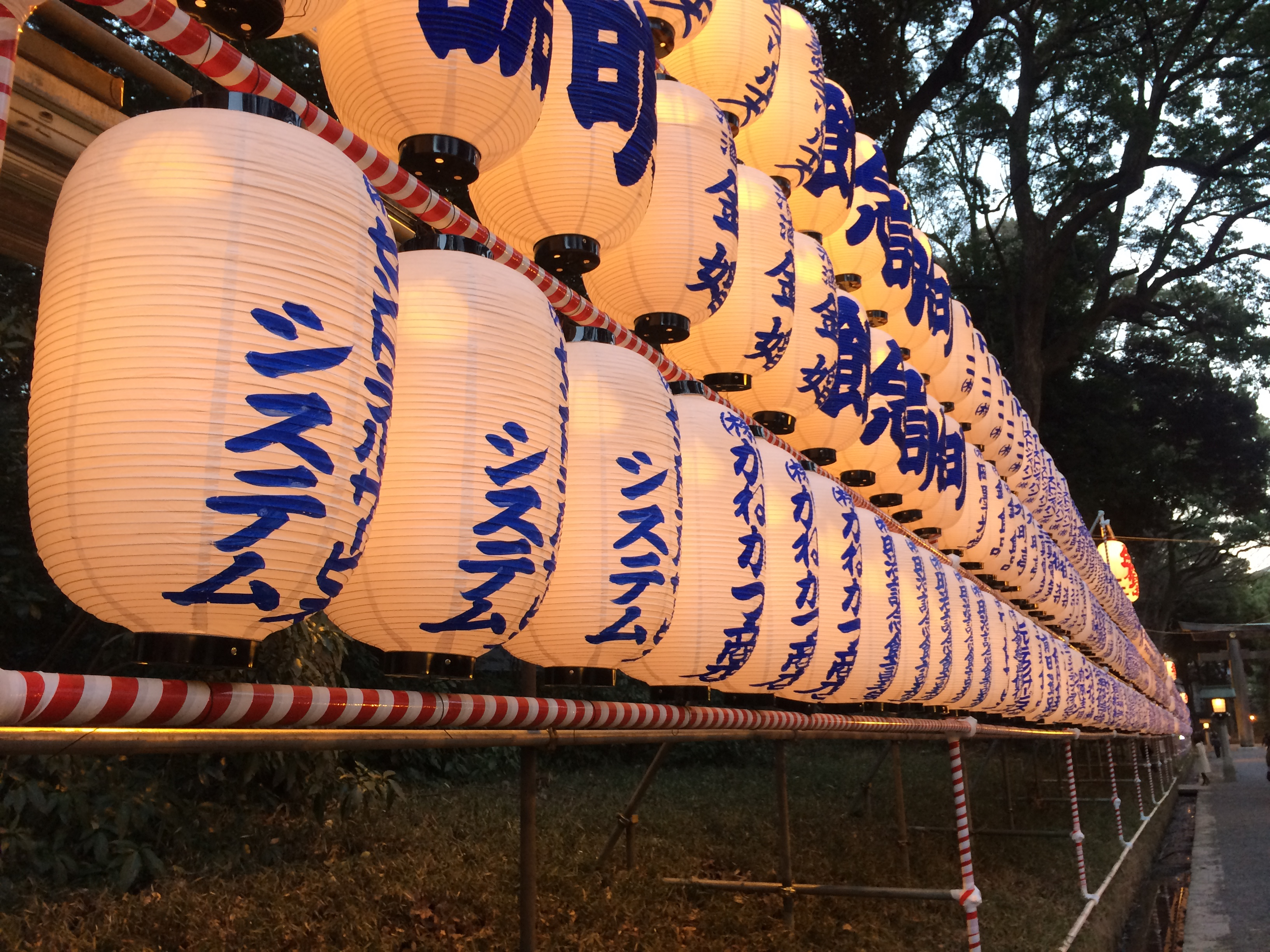
Chōchin lanterns light the path to the Meiji Shrine
And I suppose that’s yet another thing about Japan that makes it special: it’s a place so full of stuff – of paradoxes and contrasts, of culture and tradition, of modernity and trendiness and of so much elegance and beauty, that it’ll keep you coming back. I, for one, can’t wait.
Jetlag kicked me out of bed at 630am and boy was I glad. This was the sunrise from the 30th floor: Tokyo’s formidable skyline, glass, steel and the occasional crane, bathed in the pink light of the morning sun and punctuated by the snowy peak of Mt Fuji. Stunning.
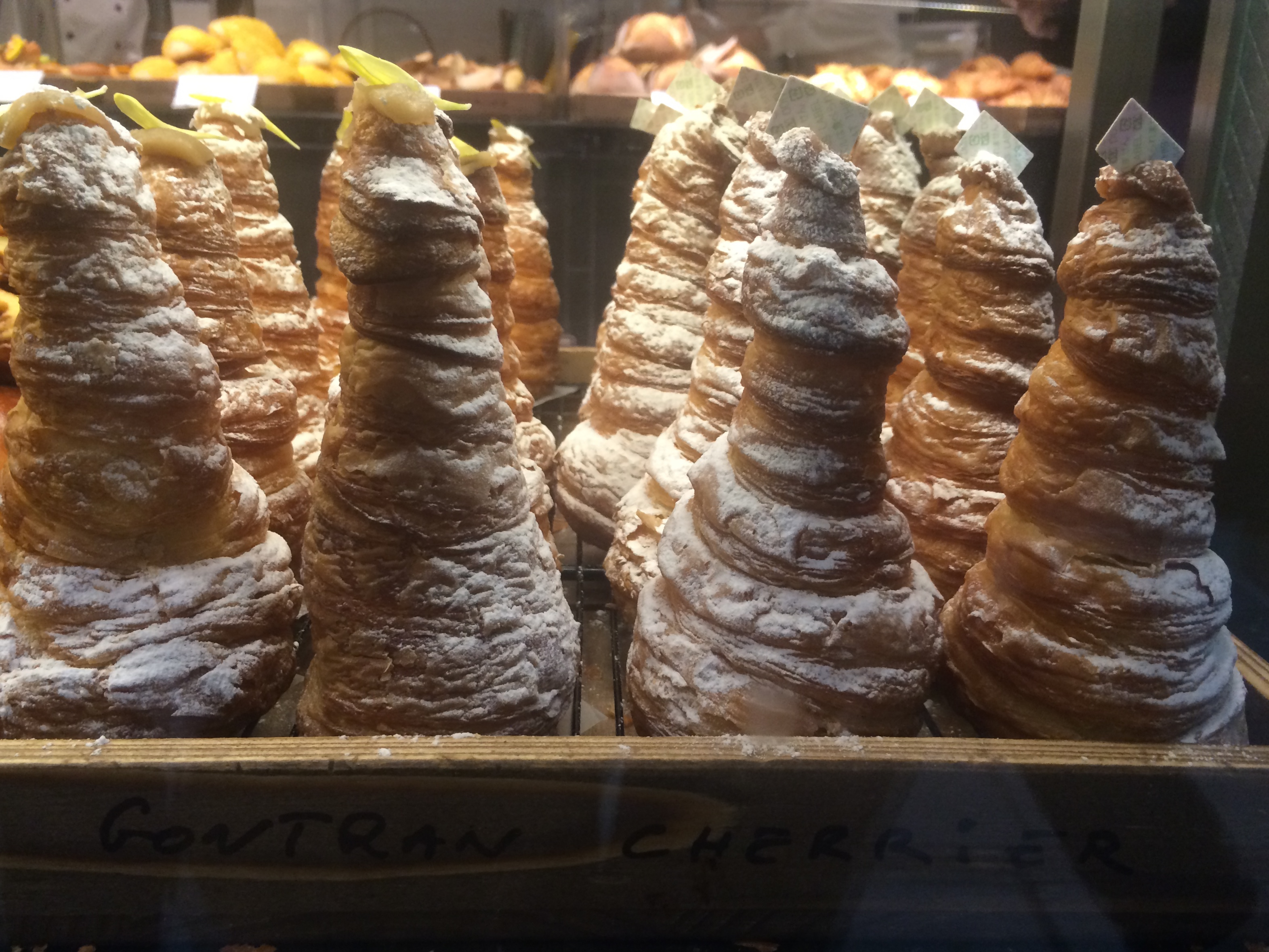
After a pit stop at the hotel gym, we were hungry and ready to hit the streets. As it turned out though, Tokyo isn’t much of a morning city, not on a Saturday at least. Bondi cafés might be bustling at 6am, but at 930, Tokyo is barely getting started. Lucky for us, we stumbled upon this little gem while walking through Mitsukoshimae station.
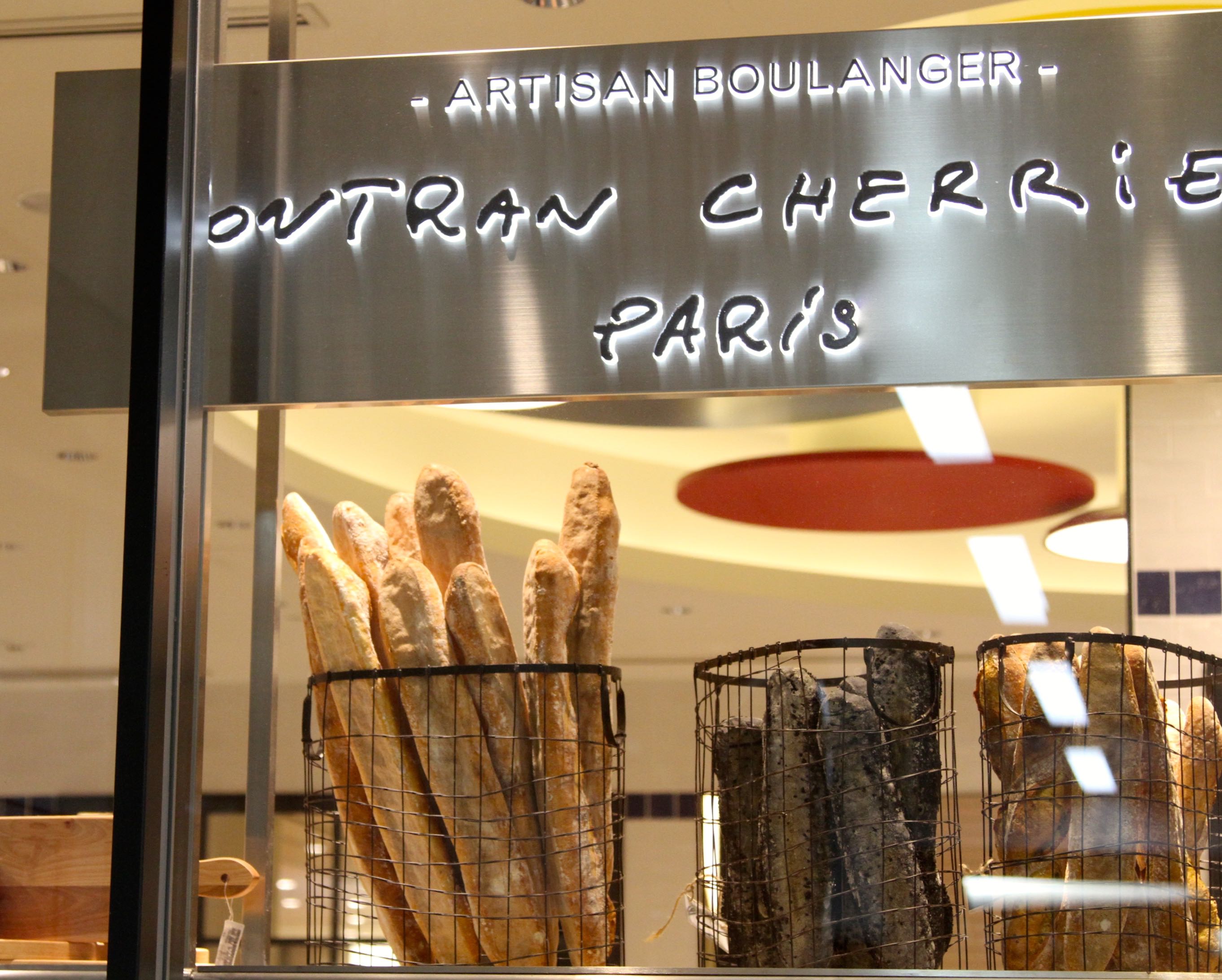
Meet Gontran Cherrier. A fourth generation baker from France, Gontran and his eponymous boulangeries are taking Asia by storm. In four years, he’s launched three shops in Singapore, expanded to 7 outposts in Tokyo and landed in Seoul. Interestingly, Gontran hasn’t ventured elsewhere in Europe or to the pastry-loving (and good pastry-deprived) shores of the United States.
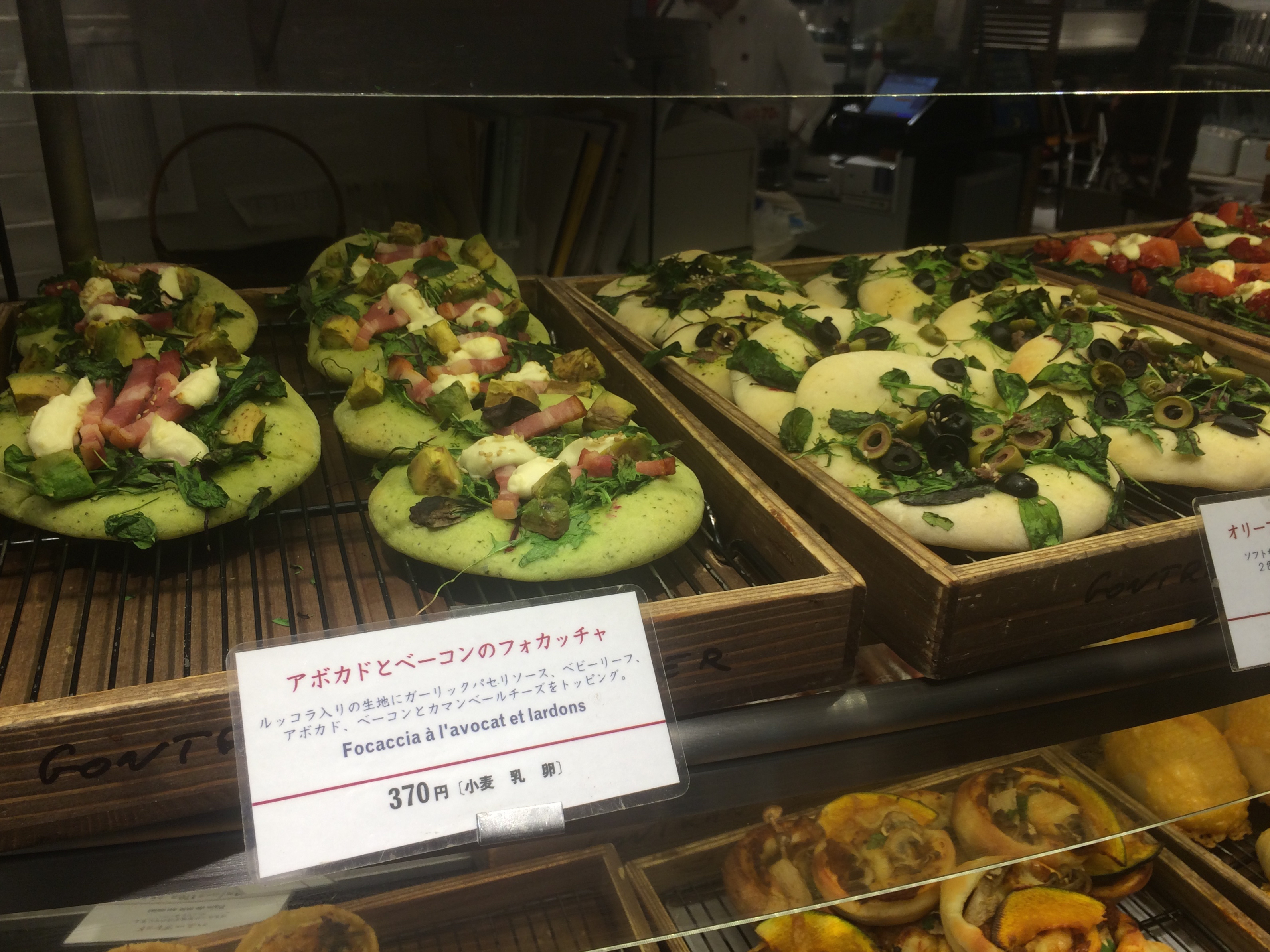
Focaccia topped with avocado and lardons
Anyway, as we stood in the cold subway tunnel, outside the entrance of Gontran’s Nihonbashi shop, the aroma of freshly baked bread and melted fromage filled the air. I felt my stomach rumble. Forget sushi, I want French pastries for breakfast!
After an appropriate amount of deliberation, we unscientifically chose three things that looked interesting. Those three things turned out to be tuna salad in a squid ink bread roll (for me), a matcha white chocolate scone (to share) and a small, cheesy bread stick for hubs (he decided to he wanted to “save himself” for Tsukiji after all).
White chocolate matcha scone
Everything was insanely good. The bread roll was soft and springy with just the right hint of squid ink flavour so as not to overpower the entire sandwich. The tuna salad was moist and beautifully paired with some lively micro greens. The scone was similarly mild in its adopted flavor yet perfectly crumbly and not overly sweet. I simultaneously wanted to inhale and savor everything.
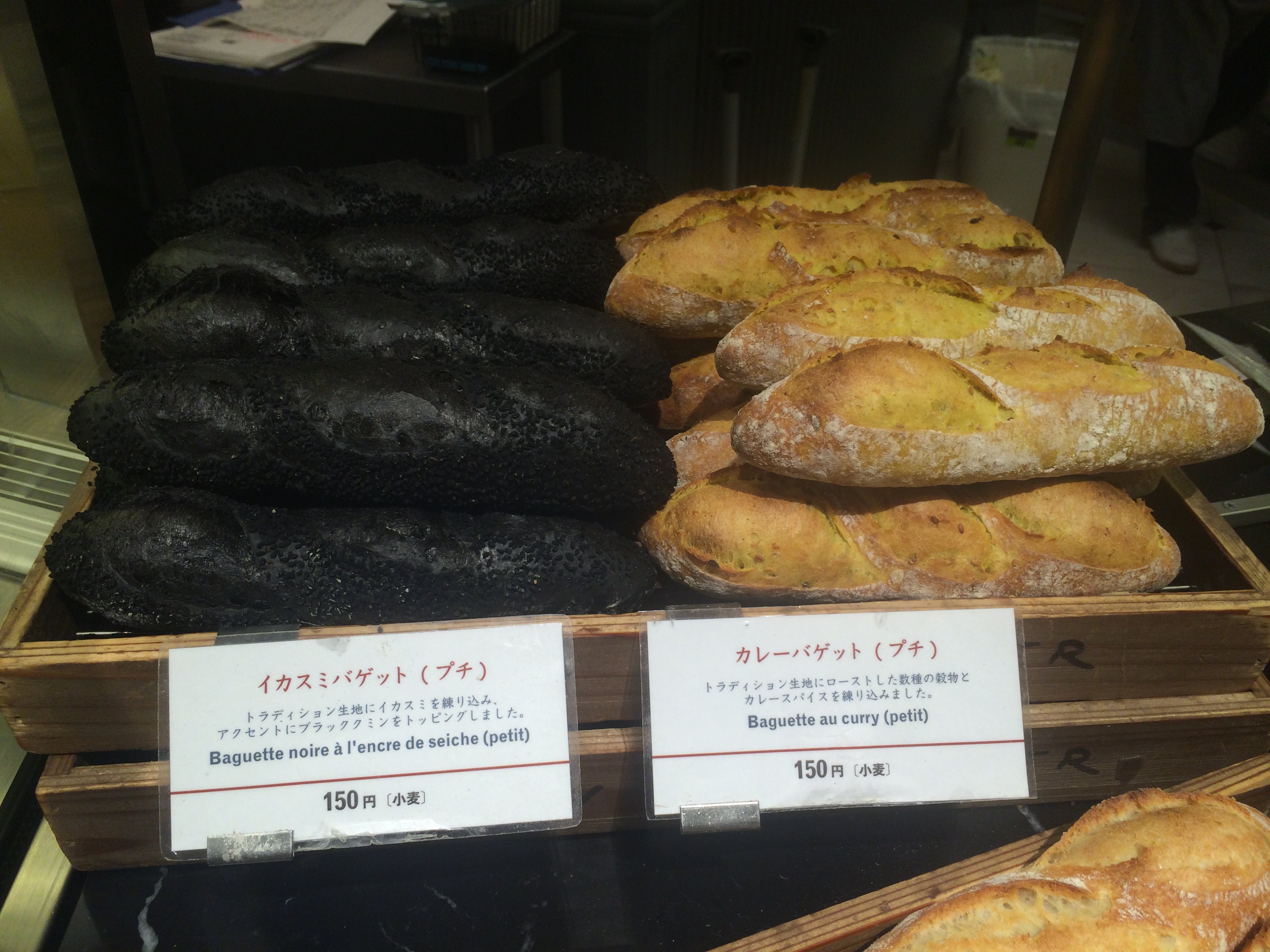
The famous “baguette noir” made with squid ink
I suppose I shouldn’t be surprised at how authentically French everything tasted. Tokyo has 50 Michelin star French restaurants and a reputation for some of the best French bakeries in the world (for comparison, London has 55 Michelin star restaurants in total).
Still, what sets Gontran apart is his uncanny ability to embrace local flavors while maintaining the integrity of what is truly spectacular French baking. In a nod to local palettes, Gontran is experimenting with creations such as miso-infused bread, curried baguettes and a sandwich filled with ham, shiso and yuzu butter. The standout, however, remains the baguette noir, the squid ink infused jet-black loaves that appeared to be flying off the shelves.
Gontran part deux
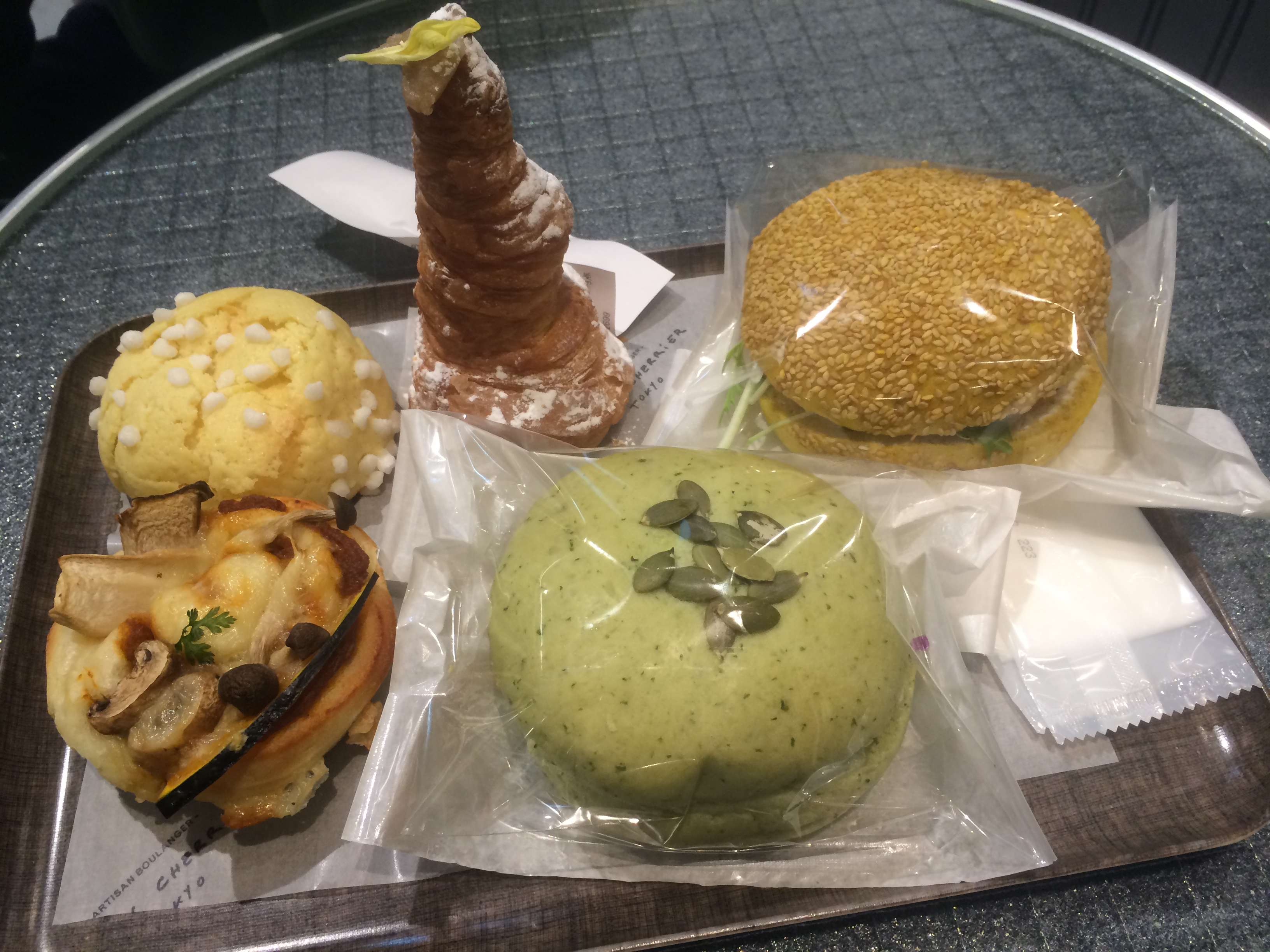
Gontran was so good that we returned the next day for more and picked up a curried chicken sandwich on a sesame roll and a lemony prawn sandwich on a matcha roll. We also grabbed a chicken and mushroom tart, a melon pan and what might just become an all-time favourite: a mont blanc.
Mont Blancs: a new favorite
Oh and the best part? He’s coming to Australia in 2015. Vive la France!
Today marks the start of a 12 day adventure in Japan. We left Sydney early this morning and landed at Tokyo Narita at 5pm. After an hour on the train, a quick stop at our hotel and another couple of layers (it is COLD), we stepped out into the city.
Dinner was in Roppongi, a neighbourhood that’s undergone a transformation in recent years, casting off its reputation as a hedonistic watering hole in favor of a more sophisticated, classier image. Today, Roppongi is known for some of the city’s best food, bars, shopping and culture.
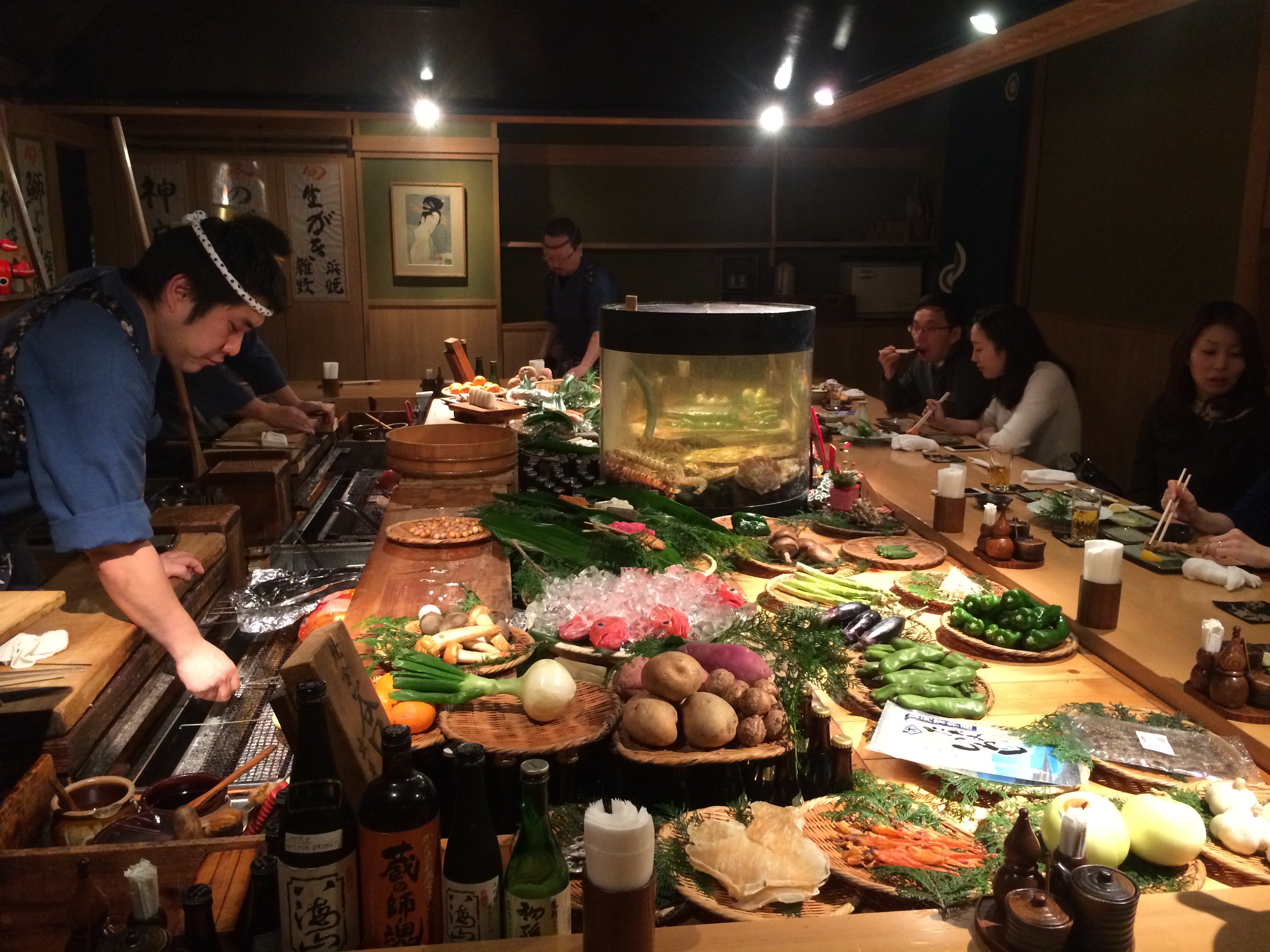
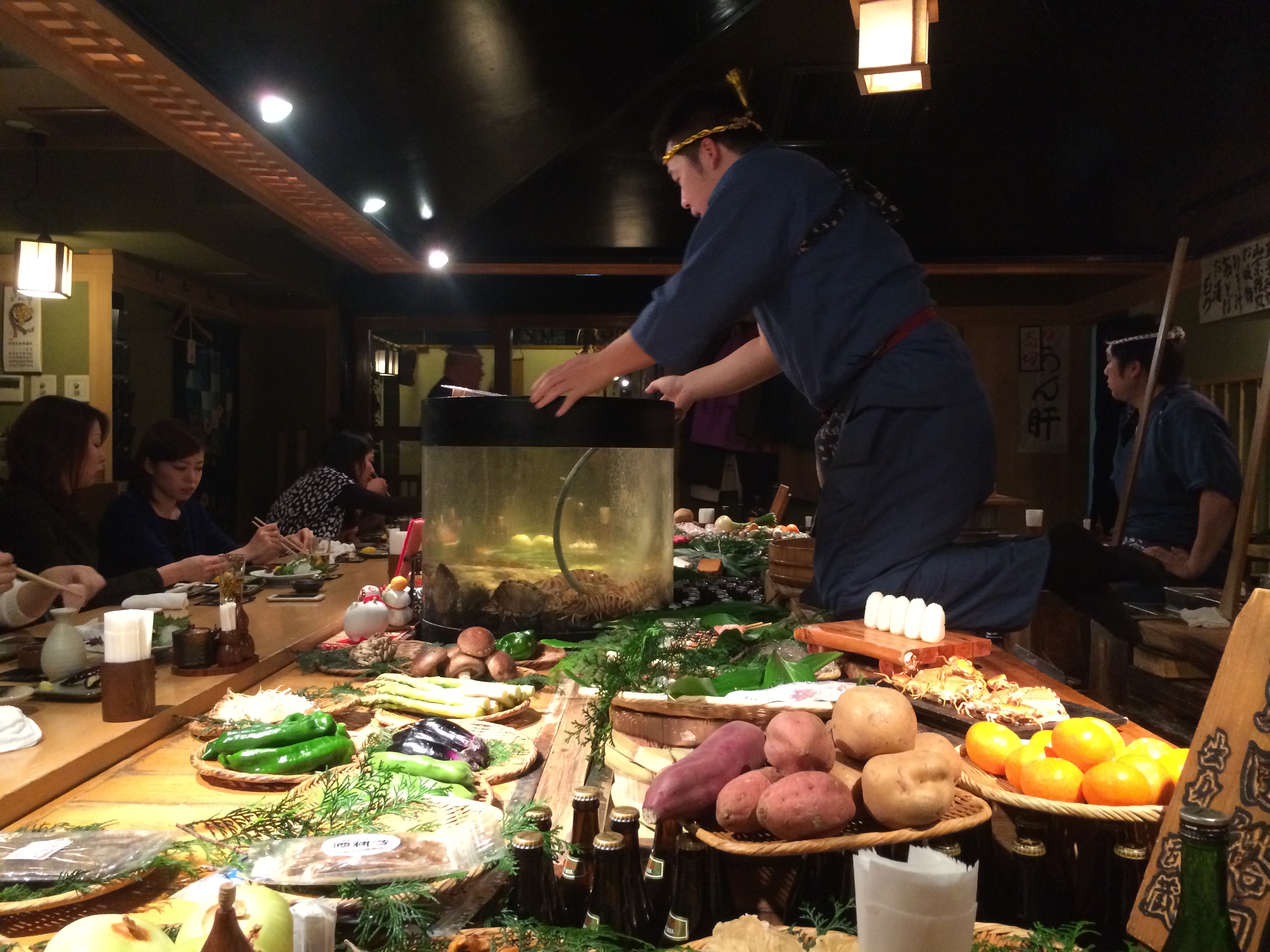
As we stepped in from the cold to Roppongi Robataya, we were greeted with a chorus of irrashaimase’s and a beautiful spread of fresh fruit, vegetables and live seafood. The space is wood-paneled and cozy, in the way that you might imagine a Japanese ski chalet to look, and the staff is warm and engaging.
“Robatayaki” or, more commonly “Robata” translates to “fireside cooking”, and is a style of Japanese cuisine in which morsels of seafood and vegetables are skewered and slow-grilled over hot charcoal.
The origins of Robata can be traced back hundreds of years to the fishing communities of Hokkaido where, at the end of the day, fisherman would encase hot coals in a stone box on their boats and gather round the makeshift hearth to partake in the day’s spoils.Here in Roppongi, our chefs for the night sat at the center of the room behind a sunken grill, with less than 15 customers seated at the semi-circular bar around them.
After a hot towel, some tea and a pouring of saké, our server gestured to the spread and asked what we’d like to eat. For someone who doesn’t particularly enjoy looking at menus, it doesn’t get much better than this: I felt like a kid in a candy shop and immediately pointed at various delicious looking vegetables.We chose asparagus, some enoki mushrooms, an eggplant and a hearty plate of fava beans. We also picked out a cut of fish and a giant prawn from the gorgeous tabletop tank. Lastly, we ordered some sashimi and on the recommendation of our server, some Hokkaido oysters.
This might have been the tastiest asparagus ever
Fresh, thick-cut sashimi
Giant oysters from Hokkaido
Yellow tail collar
Giant shrimp grilled to perfection
Delicious enoki mushrooms
A mini eggplant
Incredibly fresh fava beans
Needless to say, everything was delicious. The produce and seafood is all so fresh that robata seasoning rarely involves more than a basting of oil and sometimes miso. Most dishes are served with salt and a lemon wedge. Indeed, the British couple seated beside us were politely turned down when they inquired after “soy or some kind of dipping sauce”.
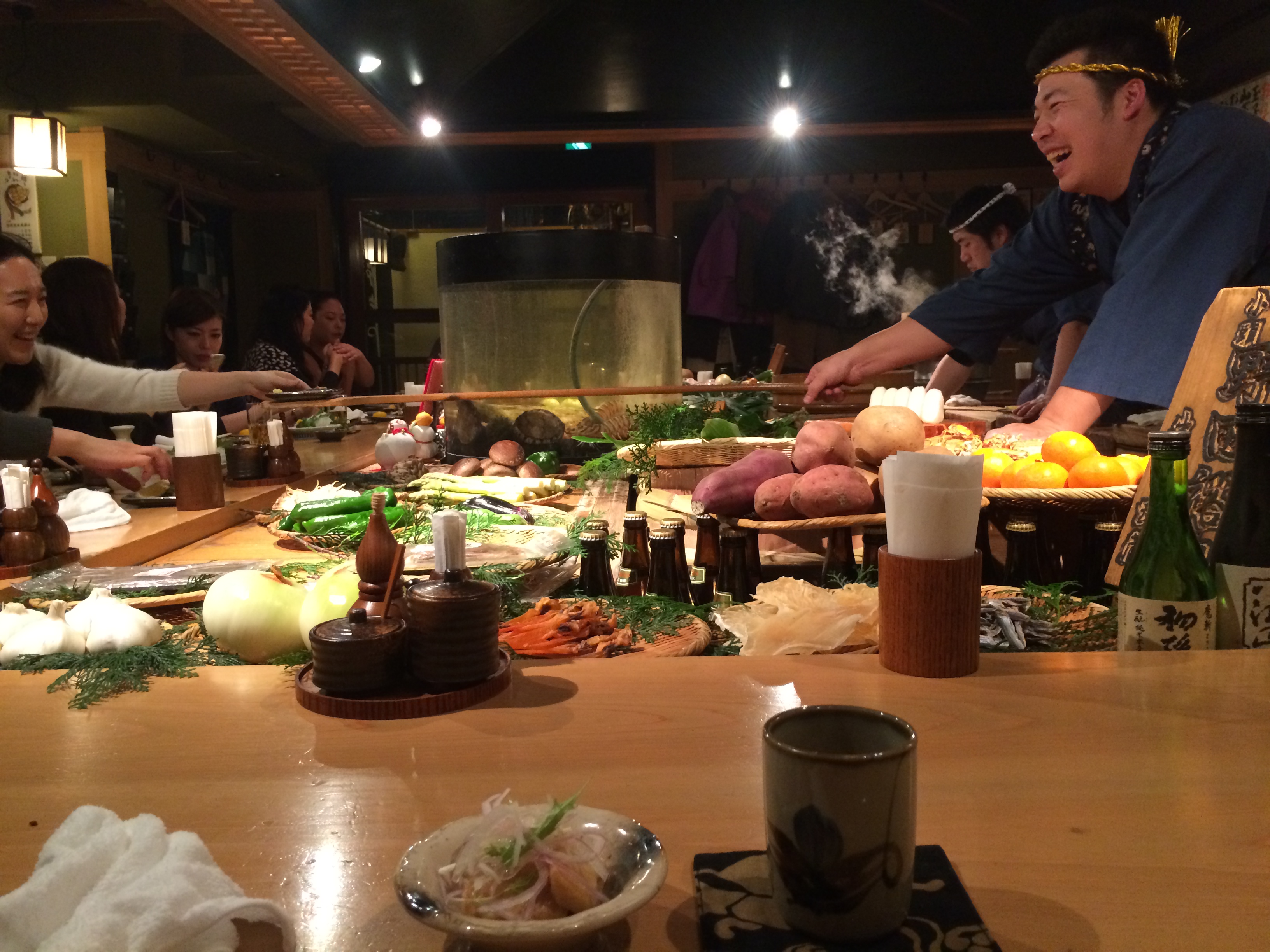
Other than the delicious food, it was the experience of Robataya that made it memorable. Each chef wields a long, smooth, wooden paddle. Once they’ve grilled and plated the food, they masterfully balance the plates and even bottles of beer and sake on these paddles, which they then extend to hungry guests. After plucking your dish from the wooden paddle, you load it up with empty plates, which the chef then deftly draws in and sets aside for cleaning.
The staff and servers at Robataya are equally engaging and will sneak up next to you and join the conversation. There was a lot of fanfare around a “changing of the chefs” where our two chefs stepped off the grills and were replaced by two members of the waitstaff.
Overall, it was pricey but an incredible meal in a very fun yet intimate environment — I only wish there were one of these in Sydney!
Happy New Year from Sydney! I hope you’ve had a great start to 2015. This was our first Christmas and New Year (or “festive season” as the locals call it) in Sydney and we’ve had a fantastic time.
We decided to embrace the hot weather and spent Christmas Day on the beach this year. We even spent a good chunk of New Year’s Day drinking and hanging out by Bondi. How ‘Strayan is that? My family’s been in town these last few weeks and we’ve had a ton of fun (re)discovering Sydney and spending some quality time together.
This year, instead of drawing up a list of resolutions that I’ll likely never revisit, I decided to pick one word to capture my focus for 2015. I figured a single word would be easy to remember and easy for me to come back to. So, for 2015, my word is “strength”.
My focus is on having the strength to make tough choices, to push myself out of my comfort zone, to be disciplined about pursuing the things I care about and saying no to the things (and people) that detract. I’m also resolving to keep my existing strengths in mind and to draw upon them, hone them and appreciate them. Lastly, I’m committing to staying on my trajectory of getting fitter and healthier and stronger every day. I’ll be pushing myself harder, cooking (even) more and hopefully logging a few personal bests (and firsts) along the way. To 2015… to strength!
Thanksgiving snuck up on us last year — we thought we’d play it cool and celebrate by going out for a meal with some Aussie friends but it turned out we needed more of a fix.
This time we’re on the ball! We’ve already had a Friendsgiving and a Worksgiving (is that a thing?) and the real Thanksgiving isn’t even for another 5 days.
I decided this year to branch out from my go-to recipes and try something different. So, for Friendsgiving, I made roast butternut squash soup. It was so good and so easy! (Recipe on the way). I also made a strawberry rhubarb pie.
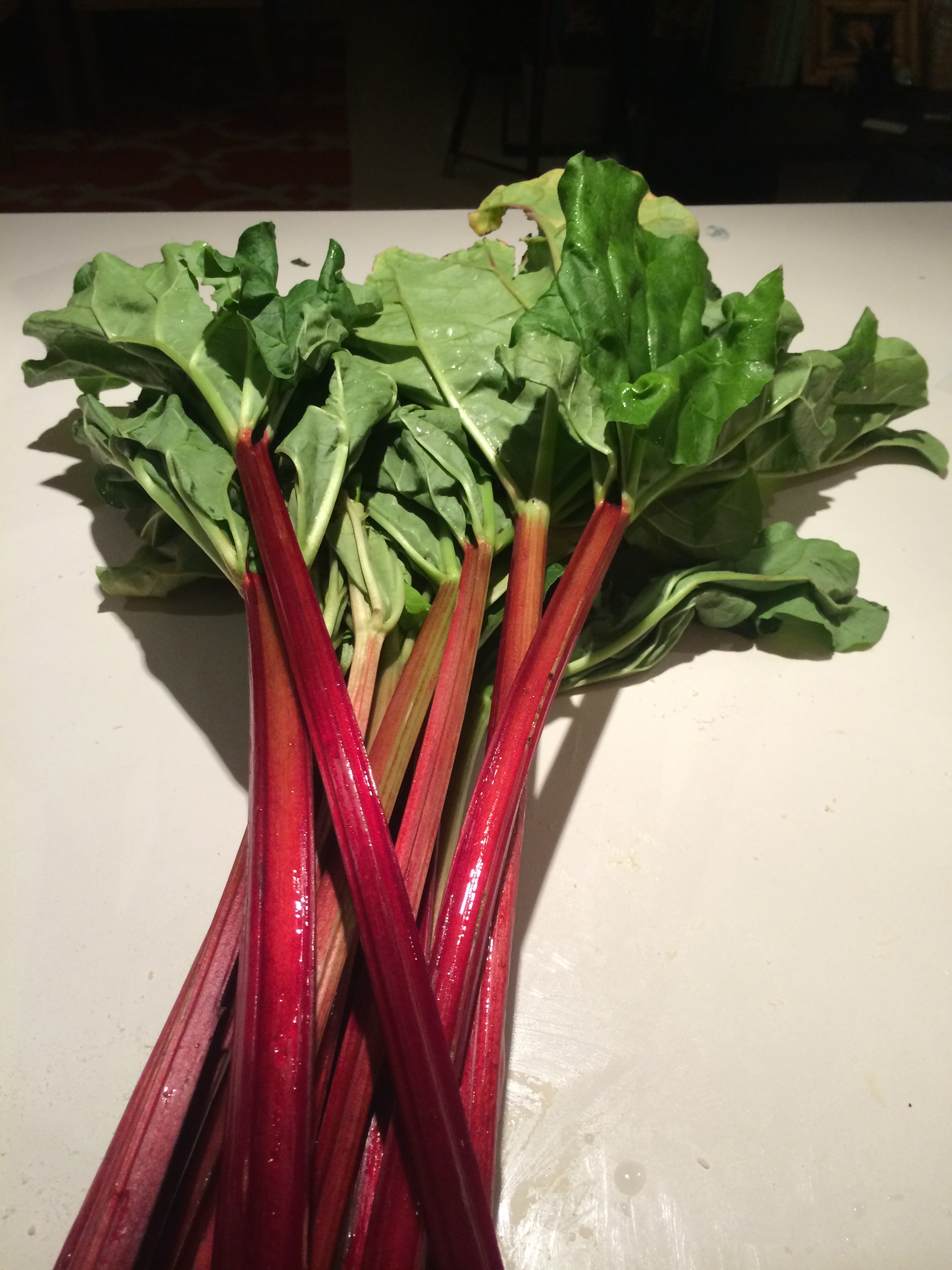
Rhubarb Rhubarb: isn’t it pretty?
Strawberry rhubarb isn’t a typical Thanksgiving pie. However, it IS summer down here. I’m a sucker for strawberries and rhubarb, especially together and more so in the summer when they’re at their peak. Besides, filling a pie with fresh fruit rather than sugar or custard makes it feel infinitely healthier.. am I right?? Before we get to the recipe, let’s talk about the cardinal rule of pie-making:
Homemade crust is the best crust
The key to a good pie is the crust. It’s the first thing you bite into and the last thing you taste. It introduces the pie and sets the tone for what’s to come. You might not swoon over a pie made with perfect crust and a poor filling, but a delicious filling will never make up for a mediocre pie crust.
A good crust has texture and flavor; it’s something you’d eat even without the filling. A great pie crust complements the yummy goodness it’s transporting into your mouth. Tangy key lime? Go with a punchy graham cracker crust. Creamy, custard? Try a textured crust made of crushed pecans. Fruit pie? Keep it simple and let the fruit shine.
Making your own pie crust might sound time-consuming and tedious but it’s actually pretty easy. More importantly, once you’ve had a good homemade crust, you’ll never go back to those bland, greasy, unsatisfying substitutes. Why would you want to waste your precious calories, not to mention your delicious pie filling, on something mass-produced and supermarket-bought? Home made all the way!
Easy, 5-step pie crust
This crust is all butter and although it may seem intimidating, it’s really only five steps. Don’t be put off by the big paragraphs for each step. I’m only trying to make this easy for you!
Prep time: 45 mins | Fridge time: 1+ hours or overnight | Cook time: 20 mins | Yields: 2 base crusts or 1 base and 1 top
Ingredients
3 cups of flour
250gms unsalted butter
10 tablespoons ice water
1/2 teaspoon fine salt
Pie weights (or lima beans or coins) for blind baking
A rolling pin
A 9″ pie or springform dish (if you like deep dish pie)
Method
1. First things first: you want your butter to be cold. Not melting, not room temperature, cold. The trick to getting your crust all flaky and textured is to leave chunks of butter intact in the dough. If you let the butter melt or if you overwork the dough, your pie crust will be tough and chewy. So, if your kitchen counter is next to a toasty warm oven, a burning stovetop or a dishwasher, take your butter some place else. Once you’re alone with your butter in a nice cool place, chop it into cubes and stick it back in the fridge.
2. Next, measure 3 cups of flour and 1/2 tsp of fine salt into a large bowl and stir to mix and aerate. Take your chopped butter out of the fridge and begin working into the dry mix. You can use a pastry blender to speed things up here or you can go old school and use your fingers. If you’re using your fingers, I’ll tell you what my 4th grade teacher taught me: wash and dry your hands (duh!) and use only the tips of your fingers! Get your palm in there and you’re sure to create a buttery mess and ruin your dough. Once you’re done, your pre-dough should look like giant crumbs the size of lima beans.
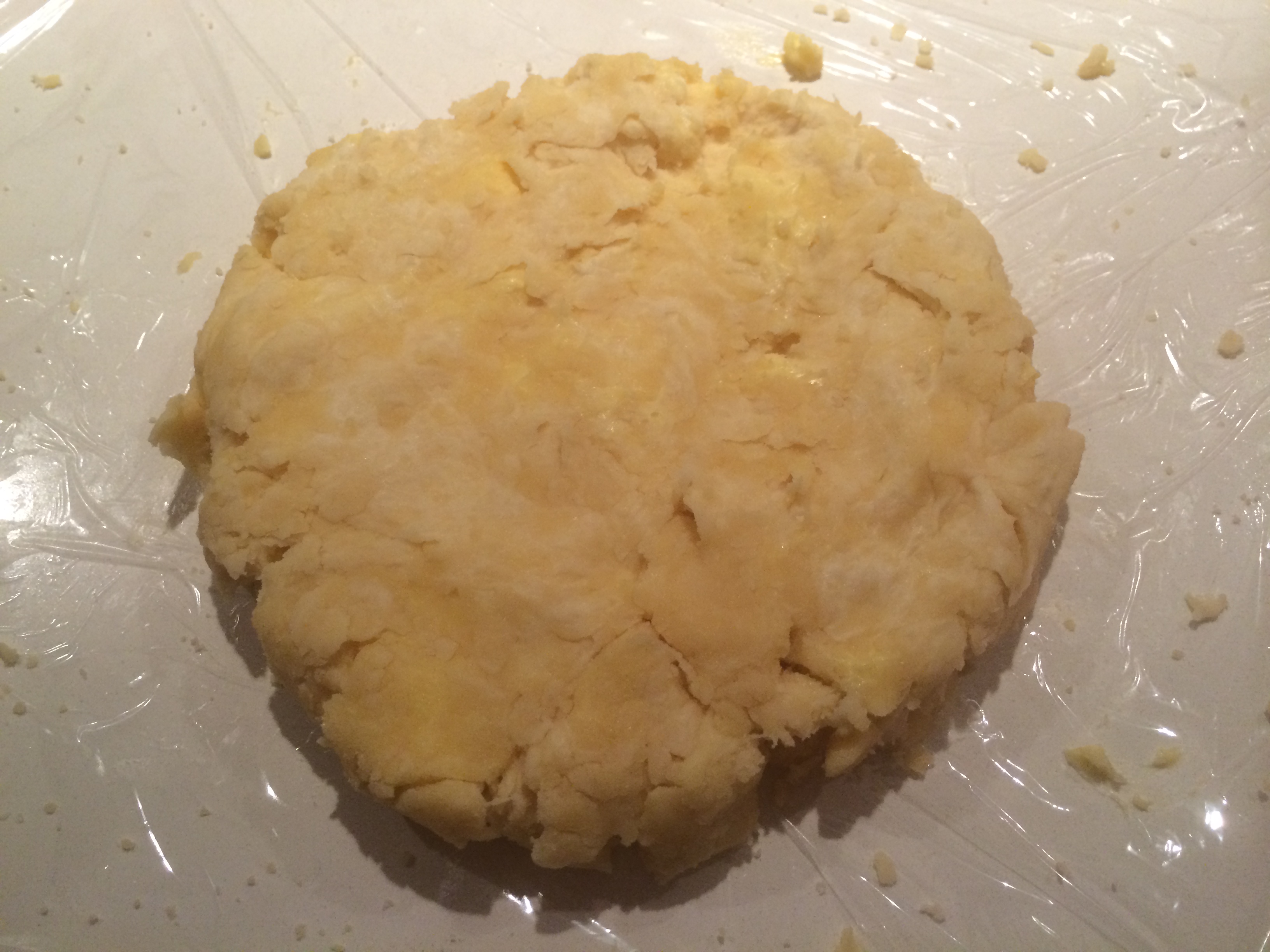
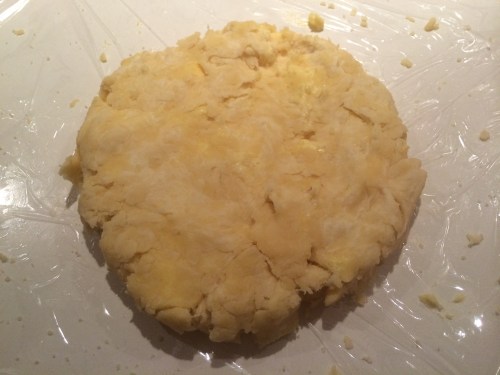
3. Get your ice water out of the freezer and add a few tablespoons at a time, mixing until the dough just comes together. Be very careful not to add too much water and not overwork the dough. Your final dough should be moist but flaky, not sticky. Divide the dough in half, flatten each piece into a disc, cover with plastic wrap and put it in the fridge. You can leave the dough discs overnight or you can ready them for baking within an hour.
4. Take your chilled disc out of the fridge and place it on a clean, cool and well-floured surface. Dust the rolling pin with flour and start rolling. The dough is going to want to stick onto the countertop but the trick here is to roll and move. Flip the dough over, move it around, do whatever it takes to keep it from sticking. You’ll want to shape it into a 12″ circle so that it’ll sit in your 9″ pie dish with about 1″ of overhang. Once you’re there, transfer it into your greased and floured pie dish (I like to use a spring form because I’m a fan of deep dish pies) and crimp the edges, using your index finger and thumb. A quick video on fluting here.
5. Finally, you’re going to blind bake your pie crust. The reason you do this is because cooking a fruit filling without a baked crust can lead to soggy crust syndrome. Nuh uh, you don’t want that. So, line the dough with baking paper or foil, and weigh down with pie weights, dry beans or clean coins. I like to use coins because they’re heavy and also good conductors of heat. Place your pie dish in a middle rack and bake at 450F / 220C for 15-20 minutes until the crust starts to look golden brown. Remove and set aside to cool.
Very strawberry rhubarb pie: the filling
Now that your crust is done, the filling is easy peasy. But first, rhubarb: rhubarb is one of my favourite things. It’s gorgeous, tongue numblingly sour (at least to me) and it reminds me so much of England. Most importantly, rhubarb and strawberries are a match made in heaven. Here’s what you’ll need:
Ingredients
2 cups of unpeeled, diced rhubarb stalks
2 cups of diced strawberries
1-2 cups sugar depending of tartness of fruit
1 tsp orange or lemon rind
1 tblsp butter
3 tblsp cornstarch or arrowroot or 6 tblsp flour to thicken
Egg wash or milk
Prebaked pie crust (see above)
Combine the filling ingredients in a big bowl and let it sit for 15 minutes. Spoon the pie filling into your pre-baked pie crust. Ta da!
(Psst: the reason the thickener is in there is to prevent your filling from getting runny and soggify your pie. Don’t want that!)
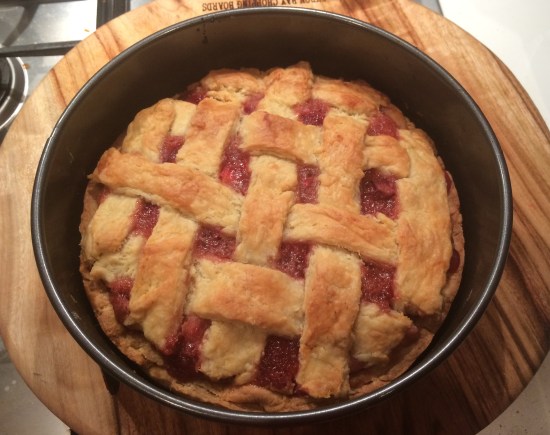
The last step in your pie baking adventure is the top crust. I opted for a lattice-style design but you can go with something simpler. The NY Times has recently done an amazing pie piece for Thanksgiving and has lots of top crust ideas here.
Brush the top of your pie crust with milk or an egg wash to encourage browning and bake in the oven at 400F for 30 minutes or until the top is golden brown and the fruit starts to bubble. Enjoy!















 A Wandering Feast